Crop outlook: Is there any hope for a bumper maize yield?
By Agness Nyirongo*
Maize remains the cornerstone of food security and economic stability in Malawi. It is not merely an agricultural commodity but a strategic crop that influences inflation, household welfare, and political discourse. Each growing season, expectations surrounding maize production shape national planning and household decision-making alike. Against a backdrop of climate uncertainty, rising input costs, and economic pressures, the question of whether Malawi can achieve a bumper maize harvest this season has become both urgent and consequential.
A bumper maize yield is typically associated with favourable rainfall, adequate access to quality inputs, effective extension services, and stable markets. However, achieving all these conditions simultaneously has become increasingly difficult. Recent agricultural seasons have highlighted the fragility of Malawi’s rain-fed farming system, exposing farmers to risks that are often beyond their control. As the current season unfolds, early crop assessments present a mixed picture—one that offers cautious optimism in some areas while raising concern in others.
Rainfall patterns remain the single most influential factor shaping maize production. Malawi’s agriculture depends overwhelmingly on seasonal rains, making the sector highly vulnerable to climate variability. In recent years, rainfall has become increasingly erratic, characterized by delayed onset, prolonged dry spells, and occasional flooding. Such patterns disrupt planting schedules and affect maize growth during critical stages such as germination, flowering, and grain filling. Even when total rainfall appears adequate, poor distribution can significantly reduce yields.
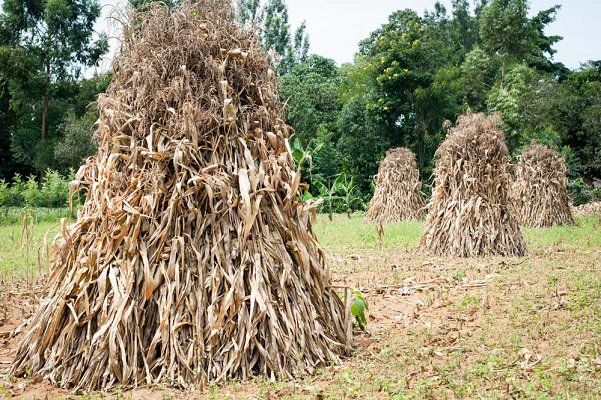
Maize remains the cornerstone of food security and economic stability in Malawi (Photo Credit: Internet)
The current season has seen uneven rainfall across the country. Some regions have benefited from timely and well-distributed rains, supporting good crop establishment and vegetative growth. In contrast, other areas—particularly in the southern and parts of the central region—have experienced dry spells that threaten yield potential. These dry spells weaken crops, reduce cob formation, and increase vulnerability to pests and diseases. Consequently, national maize output will likely depend on how the remainder of the season unfolds and whether rainfall stabilizes during the grain-filling period.
Beyond rainfall, soil fertility remains a persistent structural constraint to maize productivity. Decades of continuous maize cultivation without adequate nutrient replenishment have depleted soils of essential elements such as nitrogen and organic matter. Declining soil fertility limits crop response to rainfall and fertilizer, meaning that even in good weather years, yields often remain below potential. Soil degradation also reduces moisture retention, making crops more susceptible to dry spells.
Efforts to promote sustainable land management practices—including conservation agriculture, crop rotation, and organic manure use—have shown promise but remain unevenly adopted. Labour constraints, limited access to organic inputs, and insufficient extension support hinder widespread uptake. Without deliberate investment in restoring soil health, hopes for a consistent bumper maize harvest will remain fragile and dependent on unusually favourable weather conditions.
Access to quality seed is another determinant of maize yield outcomes. Improved hybrid and open-pollinated maize varieties offer higher yield potential and greater resistance to drought and disease. Government interventions, particularly through input subsidy programmes, have expanded access to improved seed among smallholder farmers.
However, challenges related to timely distribution, affordability of top-up costs, and seed suitability for local conditions persist.
In many cases, farmers plant improved seed without complementary inputs such as adequate fertilizer or appropriate agronomic practices. This limits the performance of improved varieties and reduces expected yield gains. Furthermore, reliance on a narrow range of maize varieties increases vulnerability to climate shocks and disease outbreaks. Diversifying seed options and strengthening local seed systems could enhance resilience and productivity in the medium to long term.
Fertilizer availability and affordability continue to influence maize output prospects. Fertilizer prices have risen significantly in recent years due to global supply disruptions, currency depreciation, and high transport costs. While subsidy programmes cushion some farmers, many still apply fertilizer at rates below recommended levels. Inadequate or late application undermines crop growth and reduces yield potential, particularly in nutrient-depleted soils.
At the same time, there is growing recognition of the need to move beyond heavy reliance on inorganic fertilizer alone. Integrated soil fertility management approaches—combining fertilizer with organic inputs, legumes, and improved agronomic practices—offer a more sustainable pathway to productivity growth. Scaling up these approaches could improve maize yields while reducing long-term costs and environmental degradation.
Pests and diseases pose additional threats to maize production. The Fall Armyworm remains a major concern, capable of causing significant crop losses if not controlled early. Its spread has increased production risks, particularly for farmers with limited access to pesticides or extension advice. In seasons marked by dry spells, pest pressure often intensifies, compounding yield losses.
Plant diseases, though less visible, also affect maize performance. Poor seed quality, monocropping, and climate stress increase vulnerability to disease outbreaks. Strengthening pest and disease surveillance systems, alongside farmer training on integrated pest management, is essential to safeguarding maize yields.
Extension services play a critical role in translating agricultural knowledge into practice. Effective extension enables farmers to make informed decisions on planting dates, spacing, fertilizer application, pest control, and post-harvest handling. However, Malawi’s extension system faces long-standing challenges, including understaffing, limited resources, and large farmer-to-extension worker ratios.
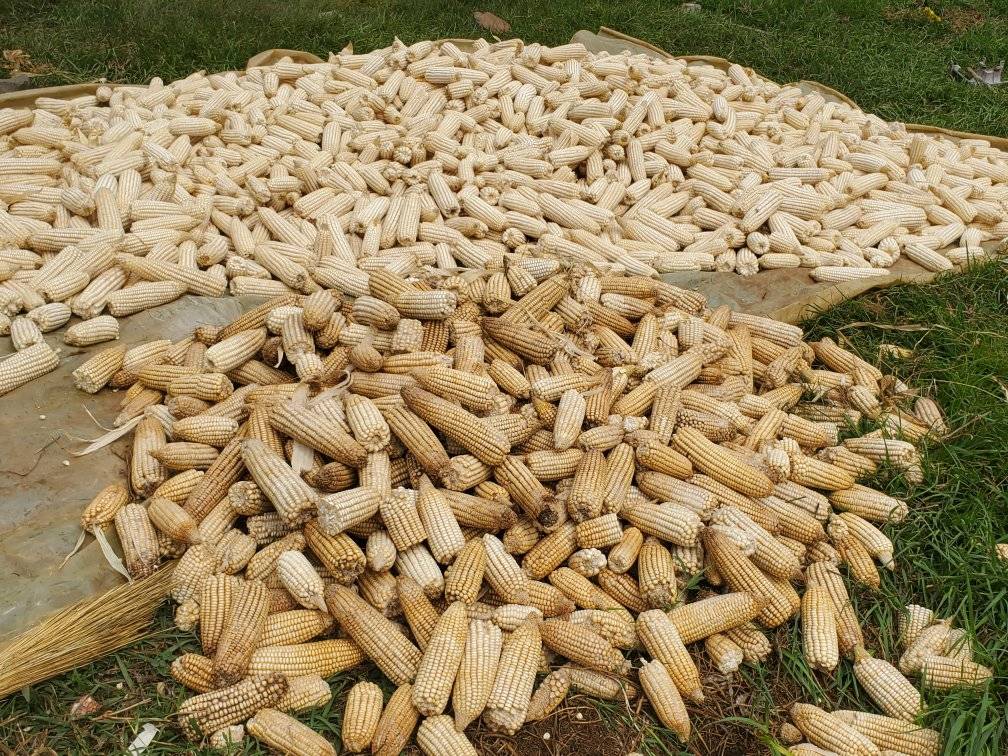
Maize crop outlook presents a cautiously balanced picture (Photo Credit: Internet)
Innovative approaches, such as lead farmer models, digital advisory platforms, and community-based training, are helping to bridge these gaps. Where extension services are active and accessible, farmers are more likely to adopt improved practices that enhance productivity and resilience. Expanding these models could significantly influence maize yield outcomes at scale.
The maize outlook cannot be separated from broader economic and market dynamics. Even when production is strong, post-harvest losses, poor storage facilities, and weak market linkages undermine the benefits of a good harvest. High losses reduce effective supply, while price volatility discourages farmers from investing in productivity-enhancing inputs.
Furthermore, low maize prices following good harvests can reduce farmer incomes, creating a paradox where national food availability improves but rural livelihoods remain strained. Strengthening structured markets, investing in storage infrastructure, and promoting value addition are critical to ensuring that increased production translates into improved welfare.
Climate change adaptation has become central to discussions on maize productivity. Climate-smart agriculture offers tools for managing risk while improving yields. Practices such as conservation agriculture, drought-tolerant varieties, water harvesting, and crop diversification enhance resilience to weather shocks. Adoption of these practices is gradually increasing, supported by government programmes and development partners, though coverage remains limited relative to need.
The success of climate-smart approaches depends on sustained policy support, farmer incentives, and access to finance. Without these enablers, adoption may remain confined to isolated pockets, limiting national impact. However, where implemented effectively, climate-smart practices provide a pathway toward more stable maize production despite climatic uncertainty.
Policy choices will significantly shape whether hopes for a bumper maize yield materialize. Consistency in agricultural policy, predictable input support, investment in irrigation, and strengthened research systems are essential foundations. Irrigation development, in particular, offers a transformative opportunity to reduce dependence on rainfall and stabilize production. While irrigation currently covers a small proportion of maize area, strategic expansion could substantially improve food security.
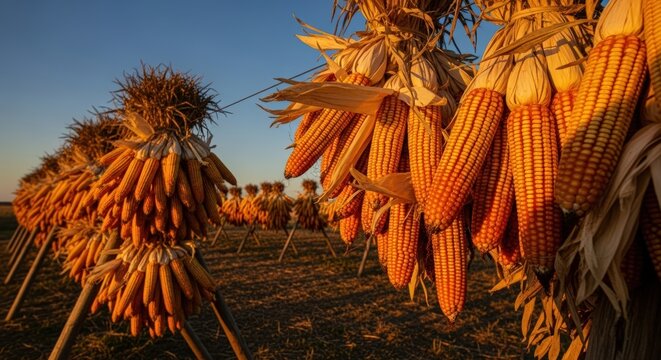
Looking ahead, the maize crop outlook presents a cautiously balanced picture. There is genuine potential for above-average yields in areas that have received adequate rainfall and where farmers accessed inputs on time. At the same time, climatic risks, input constraints, and structural weaknesses in the agricultural system continue to limit the likelihood of a nationwide bumper harvest.
Ultimately, the question of whether Malawi can achieve a bumper maize yield extends beyond a single season. It speaks to the country’s capacity to build a resilient agricultural system capable of withstanding climate shocks, supporting farmers, and feeding a growing population. Progress will require coordinated action—linking farmers, markets, policymakers, and researchers in a shared vision for sustainable food security.
In conclusion, hope for a bumper maize yield exists, but it is neither automatic nor guaranteed. It depends on how effectively existing challenges are managed and how decisively long-term investments are made. A good harvest this season would offer much-needed relief to households and markets. More importantly, sustained improvements in maize productivity would lay the foundation for economic stability, reduced poverty, and a more resilient future for Malawi.
*Nyirongo is economic justice programmes officer at the Centre for Social Concern in Lilongwe.