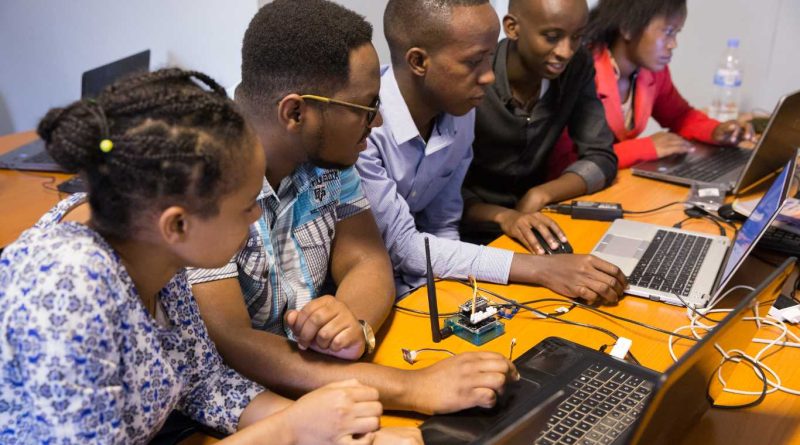
The derby: AI versus human capacity
By Dyson Mthawanji
The rapid advancement of Artificial Intelligence (AI) has reignited a long-standing debate about the relationship between human capability and machine inte-lligence. Some view AI as a revolutionary tool that will enhance human productivity and well-being, while others fear it will replace human labour and render many traditional skills obsolete. While the discussion often swings between extreme optimism and deep anxiety, the truth lies in a more nuanced middle ground.
AI has grown remarkably powerful, yet it is still fundamentally shaped, directed, and constrained by human input. Therefore, the real question is not simply whether AI can replace human capability, but how the two should best coexist to maximise benefits for society.
To understand the debate, it is important to distinguish between the types of capabilities AI possesses and those intrinsic to humans. AI excels at tasks involving pattern recognition, data processing, and high-speed computation. Machine learning systems can sift through vast amounts of data in seconds, identify trends invisible to the human eye, and generate predictions with remarkable accuracy. For example, in medical imaging, AI models have demonstrated equal or superior ability compared to human specialists in detecting conditions such as skin cancer or retinal diseases.
Yet, AI lacks certain core features of human capability, including emotional intelligence, moral reasoning, empathy, and creativity in its deepest form. Humans possess consciousness and subjective experience, with the ability to reflect, imagine, and interpret situations beyond data inputs.

How far can we go with AI? (Photo Credit: Internet)
Even the most advanced AI systems operate on patterns learned from existing datasets; they do not possess innate understanding or genuine self-awareness. For example, while AI can compose music that resembles styles of famous composers, it does not experience joy or pain, and its “creativity” is derivative rather than original. It recombines elements from what already exists—it does not create meaning in the human sense.
The question of whether AI can replace human capability depends heavily on how we define “replace.” In narrow, task-specific areas, AI is already replacing human labour. Automated customer support systems now handle most basic queries. Manufacturing plants employ robotic arms instead of assembly-line workers for repetitive operations. Financial institutions use algorithmic trading, reducing reliance on human brokers. In such cases, AI is not simply assisting humans—it is performing essential work with total autonomy.
However, replacement does not mean equivalence. AI may perform a job more efficiently or cheaply, but that does not necessarily mean it fully replicates the range of human value attached to that job. Consider journalism: AI can generate news articles summarising sports scores or financial markets within seconds. But nuanced investigative reporting—uncovering corruption, interviewing witnesses, or shaping a compelling narrative—remains a distinctly human endeavour.
Similarly, AI can diagnose diseases using scans, but patients still prefer the empathy and reassurance that only a trained doctor can provide. A machine may give accurate results, but it cannot comfort a patient facing a frightening diagnosis.
In many industries, therefore, the future will not be defined by outright replacement, but by integration—where AI handles data-heavy, routine, or mechanical processes while humans exercise judgment, creativity, and emotional intelligence. This hybrid model is already visible. Teachers now use AI tools to grade assignments or identify students struggling with specific topics, but the core act of mentoring, inspiring, and motivating learners remains deeply human.
Lawyers use AI-powered research tools to retrieve relevant cases instantly, but they still craft arguments and appear before judges. Even highly creative fields—such as film or literature—are adopting AI for idea generation and editing assistance, while human artists retain creative control.
To appreciate the value of intertwining capabilities, it helps to consider how AI and humans differ in problem-solving. AI can explore millions of possibilities simultaneously, making it superb at optimisation.
Humans also maintain adaptability that AI lacks. If an AI system is trained to detect tumors in X-ray images and the format of the images changes, it often fails until retrained. Humans, however, readily generalise from prior knowledge and apply reasoning in unfamiliar contexts. This adaptability has allowed humanity to navigate constantly changing environments, whether technological, political, or ecological. AI, at least in its current form, cannot match this flexible intelligence.
It is also important to recognise that AI is not fully autonomous—its capabilities reflect human design, training, and data. Biases present in training data can lead to discriminatory outcomes. For instance, facial recognition systems have demonstrated lower accuracy for darker-skinned individuals because they were trained primarily on lighter-skinned faces.
Hiring algorithms trained on historical employment patterns sometimes replicate past discrimination by favoring male applicants over female ones. These shortcomings reveal that AI does not inherently understand justice or fairness. Without human supervision, it simply optimises mathematical outputs instead of moral outcomes.
Ethical concerns also arise regarding dependency. If humans rely too heavily on AI for decision-making, they risk losing essential cognitive abilities or the authority to question automated outputs. In aviation, pilots remain essential because total reliance on autopilot systems can result in catastrophe if unexpected situations arise. Similarly, overreliance on AI medical diagnostics could lead to a dangerous loss of clinical reasoning.
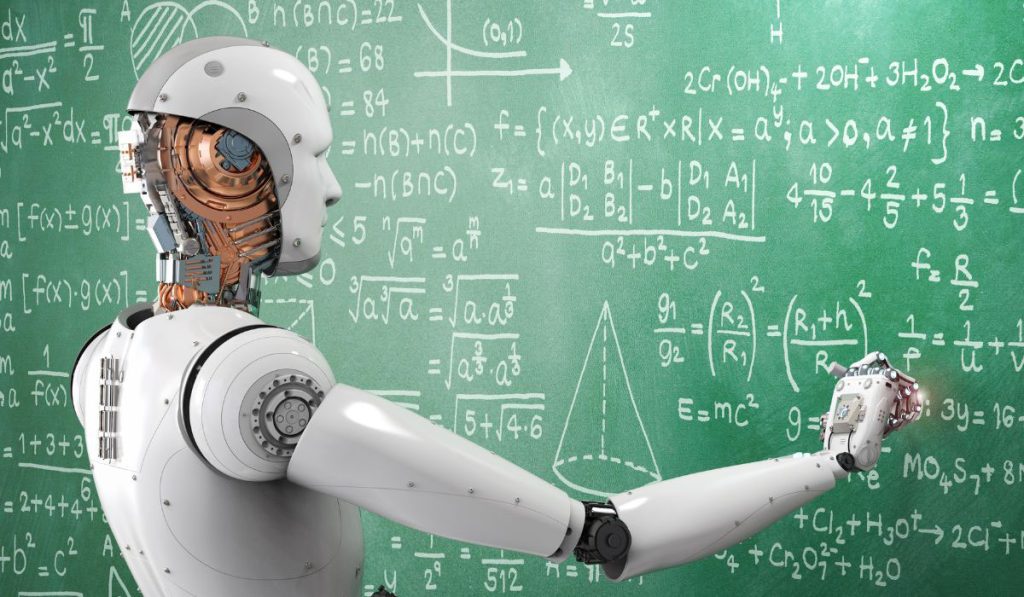
AI and humans differ in problem solving (Photo Credit: Internet)
The solution, therefore, lies not in avoiding AI, but in designing systems that enhance—not diminish—human capability. The most powerful applications of AI occur when it acts as an intelligent assistant rather than a replacement. For instance, instead of asking whether AI will replace lawyers, a more productive approach is to design AI-driven research tools that cut the time spent on document review, enabling lawyers to focus on strategy. In education, AI could create customised learning plans while teachers focus on emotional support and creativity development.
To achieve this balance, several guiding principles must shape the future of AI-human collaboration. First, trans-parency: users should know when and how AI influences decisions, especially in critical domains like healthcare, policing, and finance. Second, accountability: if an AI system makes a harmful decision, responsibility must still lie with a human institution. Third, human-centered design: instead of striving to mimic or outperform humans, developers should build tools that complement human strengths and compensate for weaknesses.
Numerous examples demonstrate that such collaboration is already possible. In agriculture, AI-powered drones monitor crop health and predict irrigation needs, while farmers interpret this data and make informed decisions. In disaster response, AI analyses satellite images to identify damaged regions, but human responders determine rescue priorities.
In creative writing, artists use AI to generate ideas, characters, or settings, but shape them with personal insight and style. These examples reveal that AI’s greatest potential lies in synergy rather than substitution.
Ultimately, the debate over AI versus human capability should not be framed as a competition between rivals, but as a partnership between entities with complementary strengths. Human intelligence is embodied, emotional, and morally grounded. AI is compu-tationally powerful, precise, and tireless. When applied responsibly, each enhances the other. The future of work, creativity, governance, and social development will belong to those who understand how to combine machine efficiency with human wisdom.