The political leadership succession agenda needs attention
By Christopher Naphiyo*
Malawi politics has been plagued by succession challenges over the years that the country has enjoyed pluralistic politics. All major political parties have gone through it without exception but no systematic steps have been taken to decisively address it.
Factions have emerged across all the parties and, in some cases, things have sorted themselves out after the issues died a natural death in some cases, which is not, in some cases, the ideal way of dealing with such issues. The issue of political succession is not unique to Malawi because many nations on the African continent have experienced turmoil of different magnitudes due to the same.
It is important to fully comprehend the concept of leadership. The notion of leadership has been subjected to multiple interpretations based on functional specificity. Broadly, leadership is understood as the process of influencing the actions of an organised group towards the achievement of set goals, aims and objectives.
Further to this, it is an institutionally recognised process aimed at giving meaningful direction and purpose to collective effort, and resulting in willing effort to be expended to achieve the desired goal. Political parties have goals and objectives, ultimately the cardinal aim is to get into power and drive the national agenda through set policies.
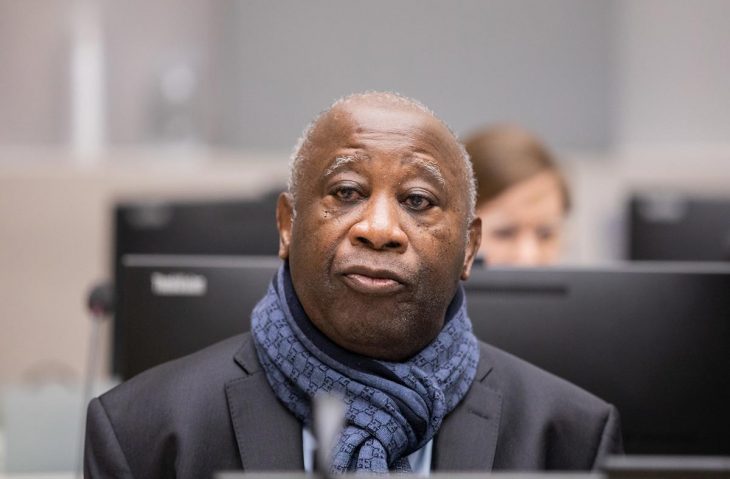
Gbagbo: Was forcefully removed from power (Photo Credit: Internet)
Political leadership succession may be classified by degree of acceptability or legitimacy as conventional, pseudo-conventional and non-conventional although democracy offers the best method of acquiring and transferring political and state power. This method of gaining power fosters democratic development in a political entity.
Conventional succession types are those acceptable ways of transferring leadership in different societies. They are often seen as formal techniques of leadership choice and replacement which enjoy the popular support. Some forms of acceptable succession me be through heredity, rotation, ballot, among others.
Pseudo-conventional succession types are the semi-acceptable and semi-formal ways of leadership transfer which do not require popular support or consent to effect. They are appointments, selection and emergency succession types.
For political parties, it is ideally through the ballot, but Africa has experienced bizarre forms of succession. One of them has sadly been hereditary, where party leadership and presidency has rotated in the same families. Malawi has seen manipulative tactics that have seen polls taking place with already endorsed candidates, while unfairly disadvantaging others. The favoured ones have normally been linked to the incumbents by blood or other ways.
Other capable party faithfuls get directly or indirectly intimidated to pave way for unsuitable siblings or other relations of incumbents. This has resulted in staged polls, whereby unsuitable connected people have contested with weak opponents or have gone completely unchallenged. The major political parties in Malawi have undergone these pseudo-conventional succession processes.
On the other hand, non-conventional succession types, are those detestable and informal means of power transfer in some political parties and societies. They include, a coup d’état, conquest, imposition and others. The absence of proper alternatives do not only breed autocracy in the country or continent but also created avenues for self-succession and life leadership that is not in tandem with democratic rule.
Within the context of democratic foundations in Africa, power has continued to sneak into the hands of the elites who were allies and agents of bourgeoisie clans. The creation of class in Africa and the transfer of power to the formed class have continued to distance the people from power. The suppression of possible alternatives to succession as often promoted in Africa by some leaders so as to make state leadership some family affairs is an act of dictatorship.
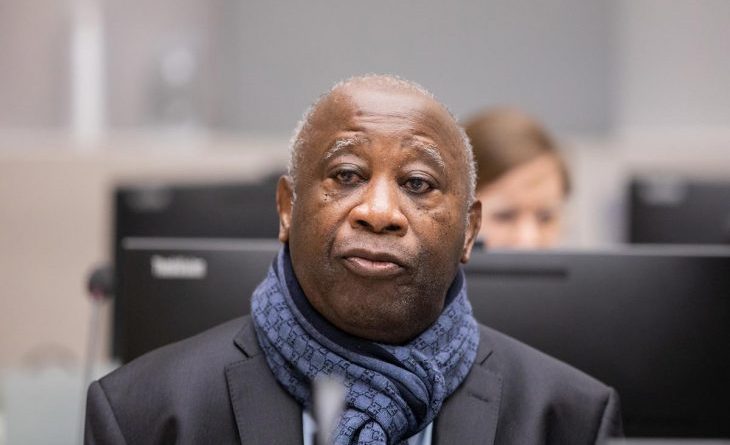
The death of Felix Houphouet-Boigny on the throne in Ivory Coast in 1993 created a power vacuum that culminated in the ascent of Laurent Gbagbo to the Ivorian presidency. Gbagbo refused to step down when people disagreed with this but what is more fascinating is that he even refused to step down after suffering a defeat in presidential election until a bloody civil war engulfed the country that resulted in his forceful removal and apprehension with support from French military forces. In Togo, Gnassingbe Eyadema ruled for 38 years and died in power in 2005 and due to lack of outstanding constitutional alternatives for succession; the military installed his son, Faure Gnassingbé, as successor.
Africa has recorded numerous cases of attempts to legally amend constitutions to extend the term of outgoing presidents but not all have been successful. Malawi witnessed the institution of a “life-presidency” after gaining independence through a party convention in 1971. With the transition to democracy in the 1990s, term limits became a central component of the country’s constitutional order.
While they have survived intact, they have been targeted for removal or revision on two occasions prior to the 2004 elections and these attempts failed. The successful preservation of Malawi’s term limits has reflected the operation of some crucial accountability mechanisms that undermined political plots to remove them. These included checks on powerful political actors that emerged from “formal” institutions, such as parties and the legislature.
It also involved resistance from civil society and other non-state actors.
In 2005, it failed in Nigeria following intense parliamentary debate and rejection of the amendment of the presidential tenure. Lasana Conte of Guinea and Dauda Jawara of Gambia engineered constitutional amendments that made them life presidents in both Guinea Conakry and the Gambia signified the success of this act. Multi-party states are fast becoming one-party states and governments are becoming a one-man business because of leaders who do not want to leave power. Those who dare to talk about power succession are subjected to political torture, with examples being Uganda and Cameroun.
However, time is ripe for Malawi, and Africa at large, to systematically institutionalise leadership succession in political parties. All political parties need to deliberately establish robust internal management structures and succession systems, prioritising collective wisdom over the cult of personality because essentially, individuals do not outlive institutions; it is institutionalised systems that endure beyond tenures.
Malawian parties can draw lessons from the African National Congress (ANC) of South Africa, the Frente de Libertação de Moçambique (FRELIMO, Mozambique Liberation Front), the United Democratic Alliance (UDA) of Kenya, the People’s Movement for the Liberation of Angola (MPLA), and most recently and Chama Cha Mapinduzi (CCM) of Tanzania. These political parties are lauded for having properly institutionalised leadership succession plans.
In the case of FRELIMO, the party’s succession policy is an internal party process that has been managed over time through its main decision-making bodies, like the Central Committee and Political Commission, and not a single set of publicly codified regulations. The process is often a complex negotiation involving internal party processes and dynamics, regional balance, and the influence of historical leaders and other appropriate groups. The end result is that everybody knows who is coming next in the line of command for the next three to five elections.
For the ANC, the process commences at the grassroots where branches nominate candidates for leadership positions. Thereafter, dele-gates from the branches attend the National Conference to elect the President, Deputy President, and other top officials through secret ballot. The party constitution outlines roles of key position holders like the President, the Secretary General and others as well as the structure of the National Executive Committee (NEC).
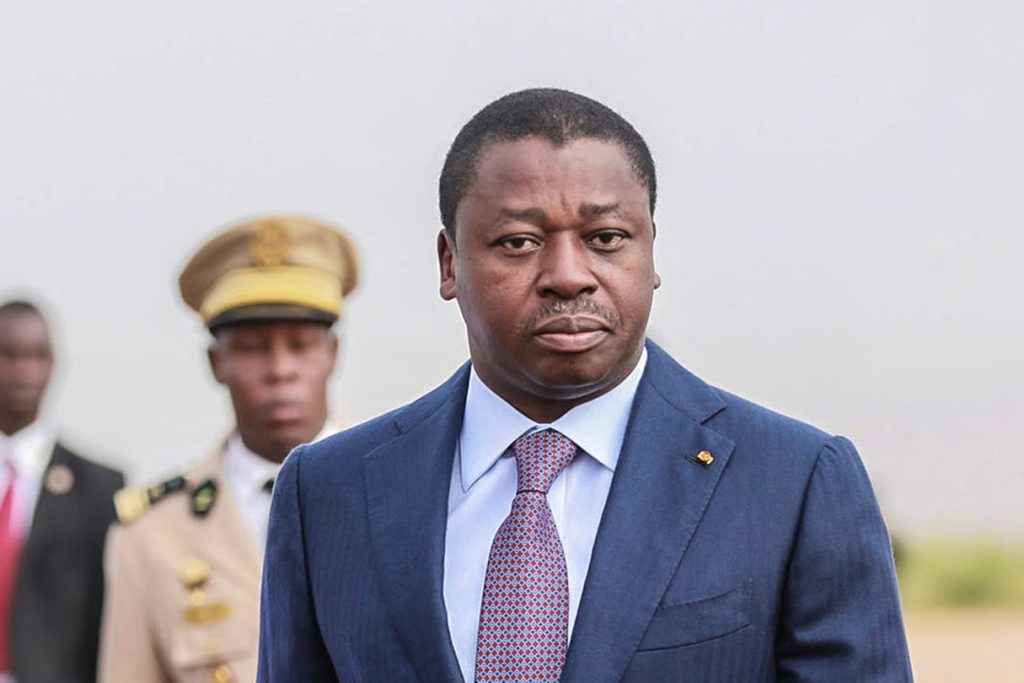
Faure Gnassingbé: Succeeded his father (Photo Credit: Internet)
ANC’s internal rules have provisions that prohibit the practice of promoting oneself for leadership outside official channels, with potential disciplinary action for violations. In spite of the existence of formal rules, the succession processes in the ANC are often characterised by intense lobbying, political maneuvering, and factional battles leading up to the said conference.
These processes are not new to Malawian political parties but perhaps weak enforcement mechanisms promote what is contrary to the set standards. Leadership succession should not be deferred to fate or vague notions of “whom it may concern.” Such ad hoc transitions invite vulnerability.
It is clear that the lives of some Malawi’s political parties are in a precarious situation; they are sailing through unpredictability due to the absence of institutionalized leadership succession mechanisms or guidelines. The directorates of research in Malawi’s political parties must wake up from their slumber and fight against the silent monster that surfaces mainly as elections approach. Lessons are there within this region of Africa for all.
The success of the aforementioned political parties can be attributed to mentored succession. As the late Dr. Myles Munroe asserted in his early works on leadership, great leaders identify and mentor their replacements. The inaugural duty of genuine leadership is to discern a successor and commence their formation immediately. This true even from Jesus Christ’s ministry because His first act was to call Peter, whom He progressively prepared for succession.
Political leadership succession policies are crucial for legitimacy, stability and continuity because they help to prevent conflict, power vacuums and institutional collapse through the provision of unambiguous guidelines and rules for leadership transition to ensure that only deserving individuals ascend to positions of power while fostering public trust and promoting overall national development. Without such policies, political parties in Malawi and the country risk sailing through political volatility, legitimacy crises, elite capture and erosion of public trust as well as muffled governance systems.
*The author is a governance and civic education practitioner working for National Initiative for Civic Education (NICE) Trust, writing in a personal capacity.