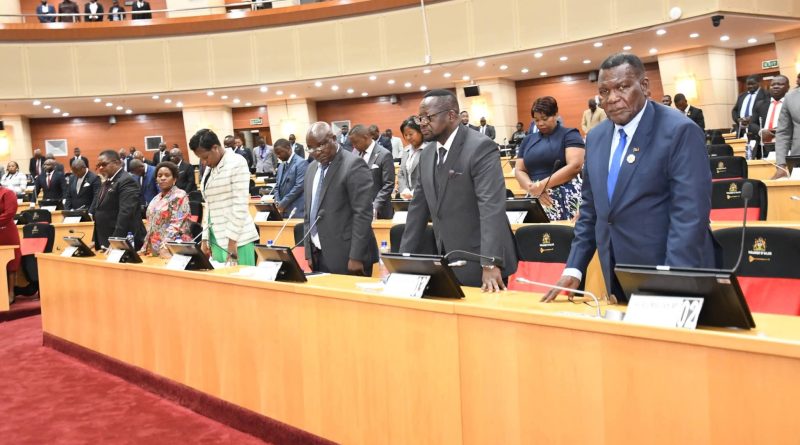
What’s in CDF?: Are MPs being honest and fair?
By Titani Chalira*
Constituency Development Fund (CDF) was introduced in the 2005/2006 fiscal year. The aim was to provide funds for infrastructure and economic development for small scale projects at the constituency level. The fund comes from the central government and it is appropriated through the national budget. Members of parliament take centre stage in this fund because they are the principals of the constituencies.
The recent actions of introducing a bill in the national assembly that is giving parliamentarians powers to ‘manage’ CDF have raised concerns of parliamentary overreach. The first thing should be to understand how the local government system works, since, the CDF is used in local government areas. The second thing to understand is the role of members of parliament in CDF usage and finally how should CDF be managed to realise its intended objective.
The local government system derives its mandate from section 146 of the constitution of the republic of Malawi. The local government system is meant to promote infrastructural and economic development through execution of local development plans, it presents local development plans to the central government and it is responsible for consolidating local democratic institutions and democratic participation. The local government system is operational in a local government area. A local government area is an area under the jurisdiction of a district council, municipal council or city council.

CDF should, among others, be channelled towards improvement of roads infrastructure (Photo Credit: Internet)
In any of the councils there are structures which are used for development purposes. There are Village Development Committees (VDCs) which come up with village action plans. The other committees are the Area Development Committees (ADCs) which have the mandate of coming up with district development plans. The area development committees are helped by the secretariat of respective councils. Thus, the secretariat provides technical guidance to the area development committees in order to be able to come up with good district development plans.
It is the council that approves the district development plans. The council is composed of members of parliament, traditional leaders, councillors and members of special interest groups. It is members of parliament and councillors who have voting powers in the councils. Except councillors, the rest are ex-officio members of the council. The councils have various service committees that look into specific issues that need the attention of the council.
There is a committee called National Local Government Finance Committee (NLGFC) set up by an act of parliament. This committee oversees the provisions of funds to councils and also checks on how the funds are managed. The CDF is allocated to the national budget by the NLGFC. The line ministry which is the ministry of local government as the policy holders ensures that funds are put to proper use in the councils.
As stated, members of parliament are ex-officio members in the council despite retaining voting power. The role of members of parliament in the operations of CDF stems from the functions that they are accorded by the constitution. Parliamentarians serve the function of law making, oversight and representation. With regard to law making members of parliament are expected to champion the making of laws that guide the operations of local government systems. They must make sure that the laws they put in place do not create loopholes for corruption and financial mismanagement.
The laws should also ensure that people are able to participate in the affairs of their respective councils. When executing the oversight mandate parliamentarians must scrutinize the expenditure of respective councils through the reports of the national local government finance committee. In the meetings at council level, parliamentarians exercise oversight by making sure that the development plan at council level is in line with the provided resources through CDF.
In addition, the parliamentarians must check if the relevant offices operating within their mandate and are not abusing the funds. As representatives of the people, members of parliament should lobby for more funds and make sure their people’s concerns are taken into consideration in parliamentary debates. At the council level, the parliamentarians should be the voice of the people by ensuring that the approved plan has prioritized projects that are important in their respective constituencies.
Looking at the structure of the local government system and how it works, parliamentarians are at the risk of conflating their oversight mandate with managing CDF. Listening to the debate on the CDF bill in parliament; the argument by some parliamentarians was that they are just fulfilling their mandate of oversight as provided in the amended constitutional provision which expounds on oversight to include checking government expenditure through their vote at the council level. This amended version is a repetition of what is provided in the same constitution on the functions of each respective branch of government.
The Constitution provides for oversight to check the abuses that may be occasioned when the executive is implementing the initiated policies through the appropriated resources in the national budget. This means that the management of the resources is tied to the initiation and implementation of policies. The executive is mandated to do this work and members of parliament provide oversight to the way management is carried out by the executive.
On CDF, the executive cedes some of the powers to the local government system. It is through this process that councils are given resources to carry out different development projects. These projects are required to be in sync with national policies. They are a continuation of the mandate of the executive which is policy formulation and implementation. The CDF has in-built accountability mechanisms. The national local government fiancé committee which is central in the allocation of CDF resources checks how these resources are managed.
Members of Parliament exercise their oversight mandate by making sure that the management of resources is following the required processes. Through various parliamentary committees, they hold to account the national local government finance committee. They also check the work of the local government service commission that employs the secretariat which is at the centre of providing technical expertise to the councils.
If they are not satisfied with the accountability mechanisms, parliamentarians use their law-making mandate to come up with proper laws to correct the flaws of the local government system. Parliamentarians use their mandate on representation by sitting in council meetings as ex-officio members to present the interests of their constituents in the process of coming up with the development plans.
The CDF bill which has made many people angry comes against a background where the Judiciary through one of its rulings held that parliamentarians do not have the mandate to manage CDF. The Court held that the management of CDF by parliamentarians amounts to desecration of the doctrine of separation of powers. The ex-officio status of parliamentarians in council meetings which included granting them voting powers implied that they were extending their mandate to policy initiation and implementation.
The Ministry of Local Government CDF guidelines and Water resources fund guidelines of 2022 which gave parliamentarians the stated powers were declared invalid to the extent of their inconsistency with the constitution. The court ruling went on to recommend the identification of alternative stakeholders to uphold constitutional compliance while maintaining the integrity of the oversight function of parliament.
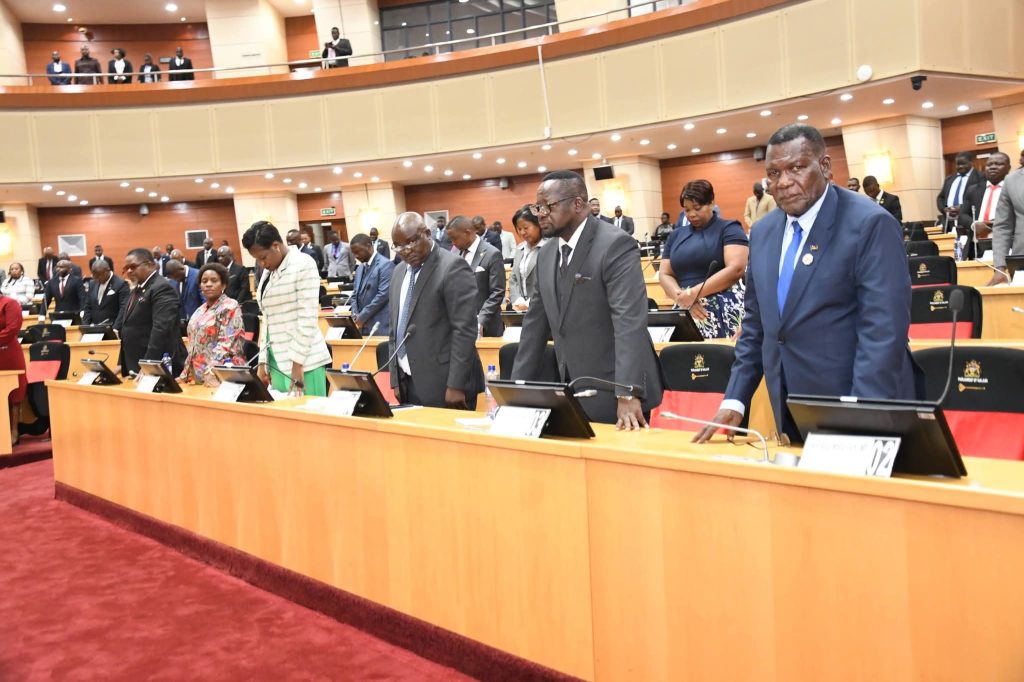
Apart from legislation, parliamentarians play a pivotal role in Malawi’s development endeavours (Photo Credit: Parliament of Malawi)
Parliamentarians have acted in contempt by going against the Court ruling that stops them from having direct control of CDF. Instead of going to parliament to work on a law that identifies alternative stakeholders to perform the task of constitutional compliance they have done the opposite.
It is important to have CDF well managed in order for it to achieve its intended objectives. Parliamentarians should work on how the public accounts committee interacts with the national local government finance committee on CDF operations if they want direct involvement in the CDF without using the backdoor to perform executive functions. It is possible for parliamentarians to use the public accounts committee by giving it powers to summon councils to report on the spending they have made using CDF.
Some of the issues that affect the management of CDF are corruption and lack of participation of the people in the process of developing village action plans. Parliamentarians and all concerned stakeholders should lobby for an effective anti-corruption bureau which will be able to apprehend all manner of people involved in abusing CDF resources. People’s participation in the processes of developing village action plans that culminate into district development plans must be enhanced. This task is for civic leaders and the media because it mostly involves public awareness campaigns to make people aware of their roles in making sure CDF is working properly.
Councillors must also be empowered and be given the required support to make sure that they are managing CDF well. Councillors must not regard themselves as competitors to parliamentarians. They must work with them as partners playing complementary roles to bring forth development to communities using CDF. It is good to let the accountability systems that are already in place to work properly. Let us all be vigilant. If parliamentarians are honest with themselves, they should not take more through the conflation of oversight with management.
*Titani is a regular contributor to The Lamp magazine.