
The broken promise
By Peter Martin Liyapah
In the heart of Mulanje, under the shadow of Mount Sapitwa, lived a young man named Mavuto Phiri. He was a humble villager, known for his hardworking spirit and quiet charm. Life had not given him much — his parents had died when he was still in secondary school — but what he lacked in wealth, he made up for in determination. And among all things he loved, nothing meant more to him than Alinafe, the beautiful girl from the neighbouring village of Kachere.
Alinafe was his sunshine. Her laughter could soften even the hardest of days, and her smile gave him courage when hope felt far. The two had grown up together, fetching water from the same stream, attending the same church, and dreaming of a simple life built on love, not riches. When Mavuto finished his secondary school, he promised her, “Give me time, my love. I will go out there, work hard, and return for you. We shall build a home together.”
So, with a small bag and big dreams, Mavuto left Mulanje for Lilongwe, the capital city — a land of promise, yet also of struggle. He found work as a security guard at a warehouse in Area 25. The pay was small, but he endured. Each payday, he would send part of his salary back to his old mother’s house, where Alinafe often helped her with chores. Every month, he sent a letter to Alinafe — filled with hope, filled with love.
Time passed. Days turned into months, months into years. Life in the city was not easy for Mavuto. The cost of living rose, and his pay barely covered rent and food. Yet he never gave up. He lived for one dream — to return home, build a small house, and finally marry the love of his life.
But back in Kachere Village, life had taken another turn. Alinafe had grown lonely. The days without Mavuto felt longer. People began to whisper, “Why wait for a man who may never return?” Among the many who admired her beauty was Mr. Mbewe, a wealthy businessman and farmer who already had two wives. He was known for his money, his many cows, and his charm — the kind that could lure even the strongest heart.
At first, Alinafe resisted him. She remembered Mavuto’s promise and the love they shared. But Mbewe was persistent. He sent her gifts — new clothes, sugar, soap, and even maize flour during the lean season. Her family, tired of poverty, began to pressure her. “This man can take care of you,” her mother said. “Love cannot fill an empty stomach.”
Eventually, Alinafe gave in. A traditional wedding followed quietly. She became Mbewe’s third wife. Though she smiled for the people, deep down her heart was heavy with guilt.
Years later, after saving every kwacha he could, Mavuto finally returned home. He arrived one bright morning, dusty from the long journey but smiling with hope. He could already picture Alinafe’s face lighting up when she saw him. He carried a small suitcase, filled with clothes and a few gifts — a dress he had bought from the market in Lilongwe, a necklace, and a small ring.
But when he reached Kachere, his heart was shattered by the news that ‘greeted’ him. The first person he met was an old friend who looked at him with pity.
“Mavuto,” the friend said slowly, “You came too late. Alinafe is no longer yours. She married Mbewe two years ago. She lives in his compound now.”
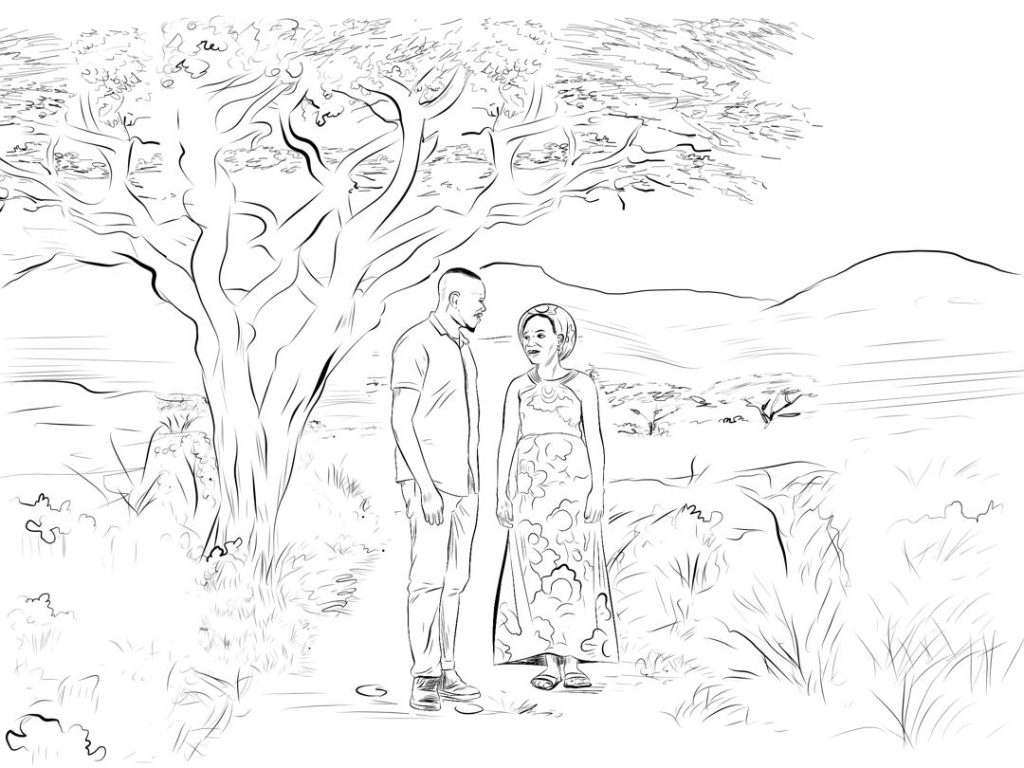
The words struck him like thunder. For a moment, he could not breathe. “You must be joking,” he said, forcing a weak smile. But it was true. Later that evening, he walked to Mbewe’s compound. There, beyond the fence, he saw her — wearing a bright chitenje, carrying a baby on her back. When their eyes met, she froze.
“Mavuto…” she whispered, tears forming in her eyes.
“So it’s true,” he said softly. “You chose him.”
“I waited,” she cried. “I waited for years. You never came. I was told you found another life in the city.”
“I found no one,” Mavuto said. “I worked for us.”
They stood there in silence as the sun dipped behind the mountain. The air was heavy, filled with unspoken pain. She wanted to reach out to him, to explain, but Mbewe’s voice called from inside the house.
That was the last time they spoke.
Mavuto returned to his mother’s hut that night, crushed and empty. The dream he had built all those years had died before his eyes. A few months later, he left the village again — no one knew where he went. Some said he moved to Mozambique; others said he became a farmer in the northern hills.
But one thing was sure: his heart remained in Mulanje, buried beneath the weight of broken promises and a love that could not survive the test of time.
And in Kachere Village, when the wind blew softly at dusk, Alinafe would sometimes whisper his name, tears falling on the baby she held — a silent song for the man who had loved her more than life itself.