Young voices, old systems; Is Malawi listening to its youth?
By Lizzie Elizabeth Chuma*
Malawi is often described as a youthful nation not only in terms of its post-independence journey, but more significantly in the age of its population. With over 60 percent of Malawians under the age of 25, the country stands at a demographic crossroads, where the energy, creativity, and aspirations of young people have the potential to shape its future in profound ways (World Bank, 2022). Yet, beneath this promising demographic reality lies a growing concern: many young Malawians feel unheard, unseen, and largely excluded from the decisions that determine their lives.
Across districts such as Balaka, the story is strikingly familiar. Each year, young people complete their secondary education filled with hope and ambition. For many, this moment represents a gateway to independence and opportunity. However, the transition from school to meaningful employment is far from smooth. With limited job openings and a constrained economy, young people often find themselves navigating a narrow path with few options. Some turn to small-scale entrepreneurship selling airtime, second-hand clothes, or basic groceries. While these ventures demonstrate initiative, they are often hindered by a lack of capital, unstable markets, and minimal institutional support.
The migration of youth to urban centers like Blantyre reflects both hope and desperation. Cities are perceived as spaces of opportunity, where education and ambition might translate into employment. Yet, for many, the reality is sobering. Urban areas are increasingly saturated, and formal employment remains scarce. The result is a growing number of young people engaged in informal work, often under precarious conditions that offer little stability or long-term growth.
Youth unemployment remains one of Malawi’s most pressing socio-economic challenges. Even graduates from higher learning institutions face significant barriers when entering the labor market. Reports suggest that many young people leave universities with qualifications but struggle to secure jobs that match their skills (ILO, 2023). This disconnect between education and employment contributes to frustration and a sense of exclusion, particularly when opportunities appear limited or unevenly distributed.
In recent years, the frustration of Malawi’s youth has become more visible, particularly in urban areas. Social media platforms have emerged as important spaces for expression, where young people openly discuss issues such as governance, corruption, and the rising cost of living. These digital conversations reflect a generation that is politically aware and eager to engage. However, while social media amplifies youth voices, it often lacks the mechanisms needed to translate dialogue into concrete policy change. As a result, many young people remain confined to commenting on systems rather than actively shaping them.
At the heart of this challenge lies the issue of representation. Decision-making spaces in Malawi whether political, economic, or institutional are still largely dominated by older generations. While experience is valuable, the absence of youth perspectives creates a disconnect between policy and lived reality. Policies designed without meaningful youth input risk overlooking the very challenges they aim to address. This gap not only limits the effectiveness of governance but also reinforces feelings of marginalization among young people.
Despite these challenges, Malawi’s youth are not passive observers. Across the country, there is growing evidence of resilience, innovation, and determination. In Blantyre, youth-led initiatives are beginning to take shape, ranging from small businesses to community-based projects and advocacy groups. These initiatives reflect a desire not only to survive but to contribute meaningfully to society. Similarly, in districts like Balaka, young entrepreneurs are finding creative ways to navigate economic constraints, often leveraging limited resources to sustain their livelihoods.

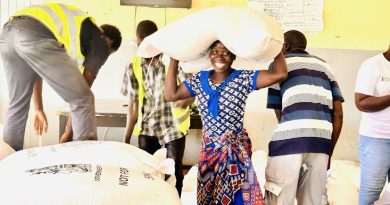
Youth-led initiatives are beginning to shape (Photo Credit: Internet)
These efforts highlight an important reality: young people are not waiting for change they are actively creating it. However, their impact remains limited by structural barriers. Access to funding is a major constraint, as many young entrepreneurs lack the collateral required to secure loans. Mentorship opportunities are also limited, leaving many without guidance on how to scale their ideas. Furthermore, platforms that allow youth to influence policy and decision-making remain largely inaccessible.
The importance of youth empowerment cannot be overstated. Deve-lopment experts emphasize that investing in young people is essential for sustainable growth, particularly in countries with large youth populations (UNDP, 2023). Empowered youth are more likely to innovate, participate in governance, and contribute to economic development. Conversely, neglecting this demographic, risks creating a generation that feels disconnected and disengaged from national progress.
Education systems also play a critical role in shaping the future of Malawi’s youth. While academic knowledge remains important, there is an increasing need to integrate practical and entrepreneurial skills into the curriculum. Many young people leave school equipped with theoretical knowledge but lack the tools needed to navigate real-world challenges. Bridging this gap requires a shift toward education that emphasizes problem-solving, creativity, and adaptability. Such an approach would better prepare young people to thrive in an uncertain and competitive economic environment.
The question, then, is not whether Malawi’s youth have potential it is whether the systems in place are enabling or limiting that potential. The answer, at present, appears mixed. There are signs of progress, including growing recognition of the importance of youth participation. However, these efforts often fall short of meaningful inclusion. Listening to young people must go beyond acknowledging their concerns; it must involve deliberate action.
Creating opportunities for youth requires a multi-faceted approach. It means investing in education systems that are aligned with market needs. It means expanding access to financial resources for young entrepreneurs. It also means opening up leadership spaces, ensuring that young people have a seat at the table where decisions are made. Without these changes, the gap between youth aspirations and reality will continue to widen.
Ultimately, the future of Malawi is inseparable from the experiences of its young people. They are not merely beneficiaries of development they are active agents of change. Their ideas, energy, and resilience represent one of the country’s greatest assets. Ignoring their voices risks undermining this potential, while embracing them offers a pathway to innovation and progress.
So, is Malawi listening to its youth? The answer is complex. There are voices being raised, conversations being had, and initiatives being formed. But listening, in its truest sense, requires more than hearing it requires responding. It requires creating systems that are inclusive, responsive, and forward-looking. Because Malawi’s future is not something that lies ahead it is already unfolding. And it is being shaped, every day, by young people who are demanding not just to be heard, but to be included.
Malawi cannot afford to treat youth inclusion as a ceremonial talking point reserved for Independence Day speeches. With 60 percent of the population under 25, every policy delayed is a generation deferred. The evidence is already here: in Balaka’s kiosks, Blantyre’s digital debates, and university corridors where graduates leave with certificates but not opportunities. Listening must now become building, building classrooms that teach adaptability, banks that lend to ideas not collateral, and councils where a 22-year-old’s input carries the same weight as a 62-year-olds.
The old systems were not designed for this demographic wave, but young Malawians are not asking for permission to exist within them. They are already farming, coding, organizing, and trading in the margins. The question is no longer “Is Malawi listening?” The question is whether Malawi will choose to be shaped with its youth, or be outpaced by them. The answer will determine if the country’s greatest resource becomes its greatest strength, or its deepest frustration.
*Chuma is a freelance contributor to The Lamp magazine.