Discussing ‘Social taboos’: The case for minority rights in Malawi
By Lizzie Elizabeth Chuma*
In many Malawian communities, certain subjects are rarely spoken about openly. They are discussed in hushed tones, avoided in public forums, or dismissed as foreign ideas. Among these sensitive topics is the issue of minority rights. Whether referring to persons with disabilities, religious minorities, ethnic minority groups, refugees, or people living with HIV and AIDS, public discussion often generates discomfort. The subject is frequently labelled controversial, inappropriate, or even un-Malawian.
Yet Malawi’s supreme law presents a different position. The Constitution of the Republic of Malawi (1994) clearly guarantees equality before the law and prohibits discrimination of any kind under Section 20. It affirms that “all persons are equal before the law” and are entitled to equal protection and benefit of the law. This constitutional promise does not exclude minorities. It includes everyone.
The question, therefore, is not whether minority rights exist in Malawi. They do. The deeper question is why there is reluctance to discuss them openly, and how Malawi can strengthen protection for those who belong to minority groups while maintaining social cohesion and cultural identity.
Understanding minority status in Malawi
Minority status does not refer to a single group. In the Malawian context, minorities may include persons with disabilities, smaller ethnic communities, religious minorities, refugees residing in Dzaleka Camp, women in male-dominated sectors, rural populations with limited access to services, and children with special educational needs. These groups often experience structural disadvantage not because they lack ability, but because systems were not designed with them in mind.
For example, despite Malawi’s commitment to inclusive education policies under the Ministry of Education, many schools remain physically inaccessible to learners with mobility challenges. Similarly, although Malawi works in partnership with the United Nations High Commissioner for Refugees (UNHCR) to protect displaced persons, refugees still face restrictions in employment and movement that limit full participation in society (UNHCR, 2023). Minority rights, therefore, are not about special treatment. They are about ensuring equal access, equal opportunity, and equal protection where inequality already exists.
Cultural conservatism and social sensitivity
Malawi is widely regarded as a culturally conservative and religious nation. Tradition shapes family life, leadership structures, and moral expectations. When minority rights are framed as challenging long-standing cultural norms, many citizens react defensively. The perception that certain rights conversations are imported from Western societies contributes to hesitation.
However, culture is not static. Malawi’s history demonstrates adaptation and transformation. From colonial rule to multiparty democracy, from limited educational access to expanded primary schooling, Malawian society has evolved. Protecting minorities does not require abandoning culture; it requires ensuring that culture promotes dignity rather than exclusion.
Religious influence and moral interpretation
Religious institutions play a significant role in shaping public opinion. Churches and mosques provide moral guidance and community identity. In some instances, discussions around minority protections are interpreted as conflicting with religious doctrine. This creates tension between moral conviction and constitutional obligation.
Yet many faith traditions emphasize justice, compassion, and protection of the vulnerable. The Constitution itself, while acknowledging the role of religion in national life, establishes that no individual should be denied rights on the basis of status (Constitution of Malawi, 1994). Balancing religious freedom with equal protection under the law requires dialogue rather than silence.
Fear of social backlash
Silence around minority issues is often driven by fear. Politicians may avoid discussing minority protections because such topics are perceived as politically risky. Community leaders may hesitate to advocate openly for marginalized groups due to fear of criticism. Even individuals who privately support equality may remain quiet to avoid social isolation.
This environment of caution reinforces stigma. When issues remain unspoken, misconceptions flourish. Open discussion does not mean universal agreement; it means creating space for respectful engagement grounded in constitutional values.
Limited civic education
While Malawi’s Constitution is progressive in its language, civic education has not always reached all communities effectively. According to reports by the Malawi Human Rights Commission (MHRC, 2022), many citizens are unaware of specific constitutional protections against discrimination. When rights are not widely understood, they are easily dismissed as optional rather than mandatory.
Improving civic awareness is essential for transforming constitutional guarantees into lived realities.
The legal foundation for minority protection
Section 20 of the Constitution prohibits discrimination on grounds such as race, colour, sex, language, religion, political opinion, nationality, ethnic or social origin, disability, property, birth, or other status. Section 13 further commits the State to principles of national policy that promote gender equality, education, public health, and social justice.
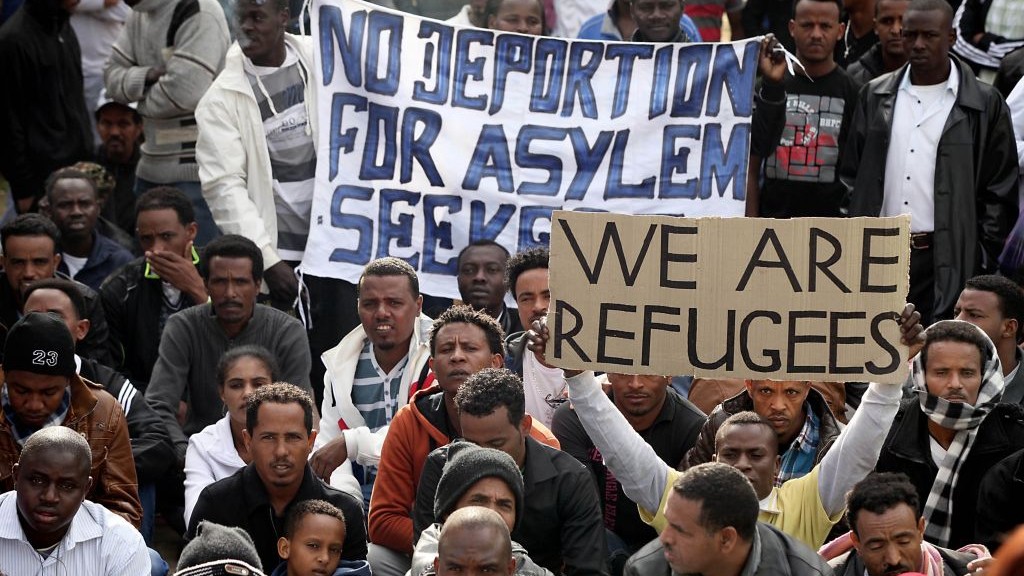
African migrants gather during a protest in Levinsky Park in Tel Aviv (Photo Credit: Gideon Markowicz/ Flash90)
Malawi is also a signatory to several international human rights instruments, including the Universal Declaration of Human Rights (1948) and the Convention on the Rights of Persons with Disabilities (CRPD), which reinforce commitments to equality and non-discrimination (United Nations, 2006). By ratifying these agreements, Malawi signaled its intention to align domestic policy with global human rights standards.
Why minority protection strengthens national development
Protecting minorities is not merely a moral or legal issue; it is also developmental. Exclusion reduces productivity. When learners with disabilities are denied quality education, the nation loses potential professionals, innovators, and leaders. When refugees are restricted from meaningful economic participation, economic contribution is limited.
Research consistently shows that inclusive societies experience stronger social cohesion and sustainable growth (World Bank, 2021). Ensuring equal participation expands the talent pool and strengthens institutional trust.
Practical pathways toward greater protection
Meaningful protection of minorities requires deliberate effort. Civic education initiatives should be expanded through radio programming, community dialogues, and school curricula. Legal institutions such as the Malawi Human Rights Commission must be adequately funded and supported to investigate discrimination complaints effectively.
Educational reform remains central. Teacher training colleges should equip educators with inclusive pedagogical skills so that learners with diverse needs are supported within mainstream classrooms. Infrastructure development must prioritize accessibility in public buildings and transport systems.
The media also carries responsibility. Balanced reporting that humanizes minority experiences can reduce stigma. When stories focus on shared humanity rather than difference, empathy increases.
Dialogue between religious leaders, policymakers, and human rights advocates can create mutual understanding. Protecting minorities does not require moral compromise; it requires constitutional commitment.
A moral and constitutional imperative
At its heart, the discussion of minority rights raises a fundamental question: Do we believe that dignity belongs to all, or only to the majority? The Constitution answers clearly. Rights are inherent and universal.
Malawi’s strength lies in unity, but unity should not mean uniformity. Diversity, when protected, enriches national identity. Silence may preserve comfort, but justice demands conversation.
The reluctance to discuss minority rights in Malawi stems from cultural sensitivity, religious influence, political caution, and limited civic awareness. However, constitutional guarantees are clear: every person is entitled to protection and equality before the law.
Moving forward requires courage, dialogue, and education. Protecting minorities is not about elevating one group above another. It is about ensuring that no one falls beneath the protection promised by the Constitution.
If Malawi is to honour its democratic foundations, it must ensure that rights are not theoretical ideals but practical realities for all citizens, especially those whose voices are least heard.
*Chuma is a freelance contributor to The Lamp magazine.