Local solutions drive big gains in cotton production
By Jenipher Changwanda
Cotton farming is emerging as a low-cost pathway to improved household incomes, farmers in Balaka have been told. Crops Officer for Balaka District Council, Silence Semani, made the remarks at a field day held at Rivirivi Extension Planning Area (EPA) – organised by the African Institute of Corporate Citizenship (AICC) – under Women Economic Empowerment in Cotton Value Chain Project (WEE-CVC).
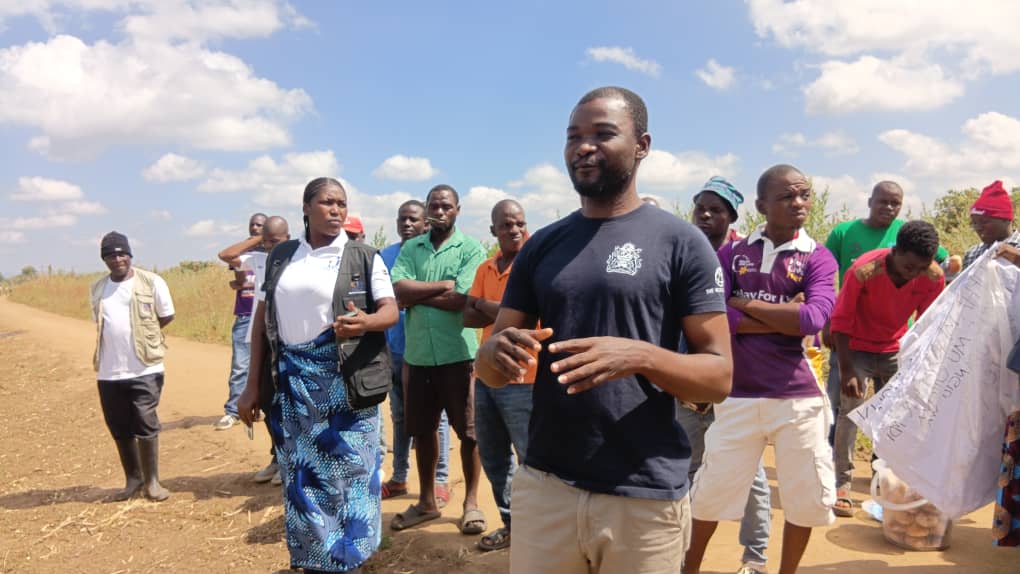
Semani (in dark blue T/shirt) explaining how Cotton IPM is practised in cotton farming. Through IPM, cotton is intercropped with cowpeas and and pigeon peas to control pests (Photo Credit: Jenipher Changwanda)
The field day was held under the theme “Building Resilience through Sustainable Solution in Agriculture.Biochar, Cotton Integrated Pets Management (IPM) and Sesame farming innovations were showcased as some of the recommended technologies that are enabling farmers increase production.
Semani said farmers can make more profits from cotton because various technologies and innovations in cotton farming are made up of locally available resources.
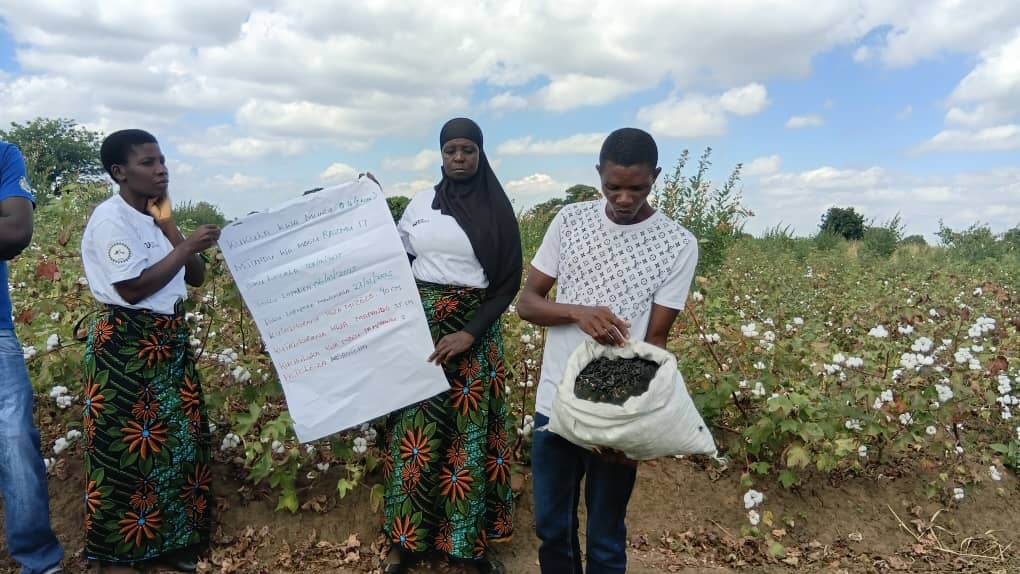
Solomon (Right) explaining how Biochar is processed and administered in cotton farming (Photo Credit: Jenipher Changwanda)
“We have demonstrated that both Biochar and Cotton IPM can be made using materials that farmers already have in their communities,” Semani said.
Semani added: “We have seen that Biochar is made up of stalks of cotton, pigeon peas or maize. These are natural waste materials that would otherwise be thrown away. We have also seen that intercropping cotton with cowpeas and pigeon peas controls pets in cotton farming. These methods are cheap compared to chemical pesticides.”
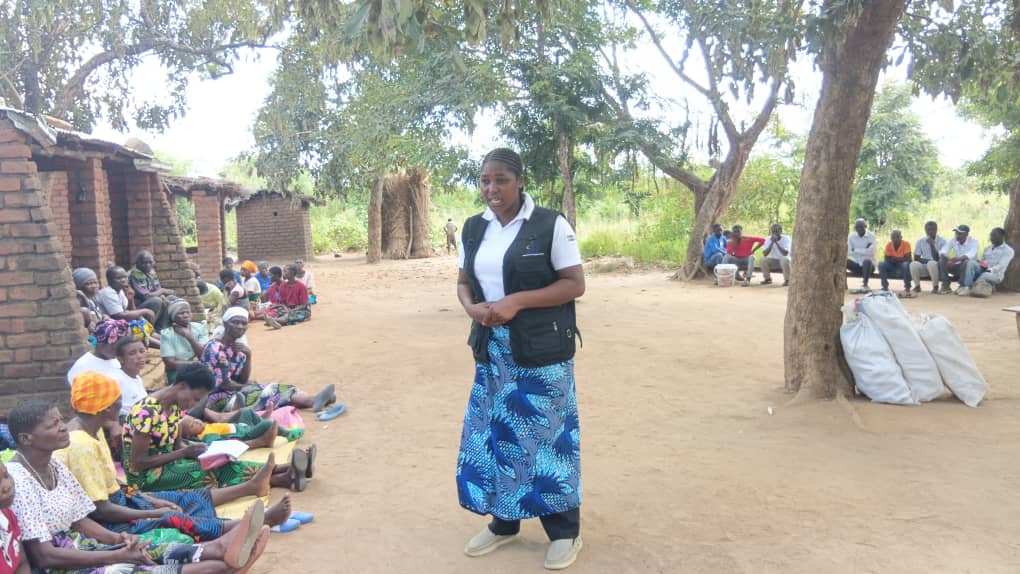
Processing time: Mafupa explaining the overview of the WEE-CVC (Photo Credit: Jenipher Changwanda)
Speaking on the sidelines of the field day, Project Officer for AICC in Balaka, Diana Mafupa, said the main objective of the field day was to demonstrate agriculture practices that strengthen farmer resilience to climate change, while improving productivity and incomes.
Mafupa added that the field day also served as a platform for knowledge exchange, collaboration and linkage.
“Beyond demonstrations, a field day allows farmers to share experience and learn from one another, while connecting farmers to key stakeholders, who can support their growth and sustainability,” she said.
According to Mafupa, the choice of Biochar, Cotton IPM and Sesame farming was deliberate saying, the interventions directly respond to challenges farmers face in the area.
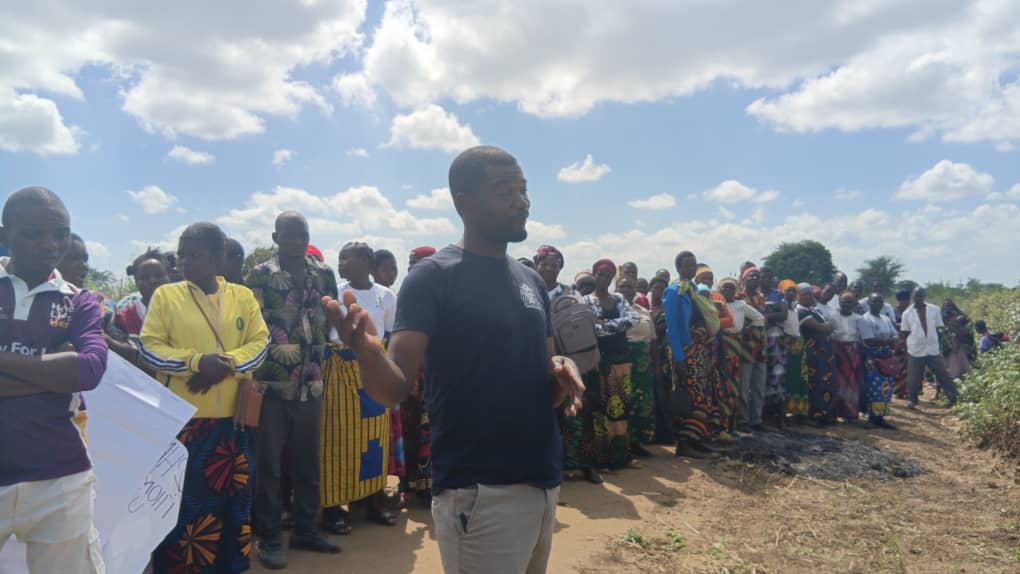
A cross-section of farmers who attended the event (Photo Credit: Jenipher Changwanda)
“Biochar improves soil fertility and enhances water retention, Cotton IPM reduces reliance on expensive chemicals, while Sesame offers drought-tolerant, high value crop that has a potential to improve household incomes.
The field day was hosted at the farm of lead farmer, Kenneth Solomon, who shared how cotton and Sesame are helping farmers in the area, adapt to climate challenge. Solomon said both crops are playing a critical role in strengthening resilience among farmers in the area.
“Cotton and Sesame farming are helping our community to become more climate resilient. Every year, we experience erratic rainfall, prolonged dry spells and increased pest outbreaks; but these crops are proving to be more reliable under such conditions,” he said.
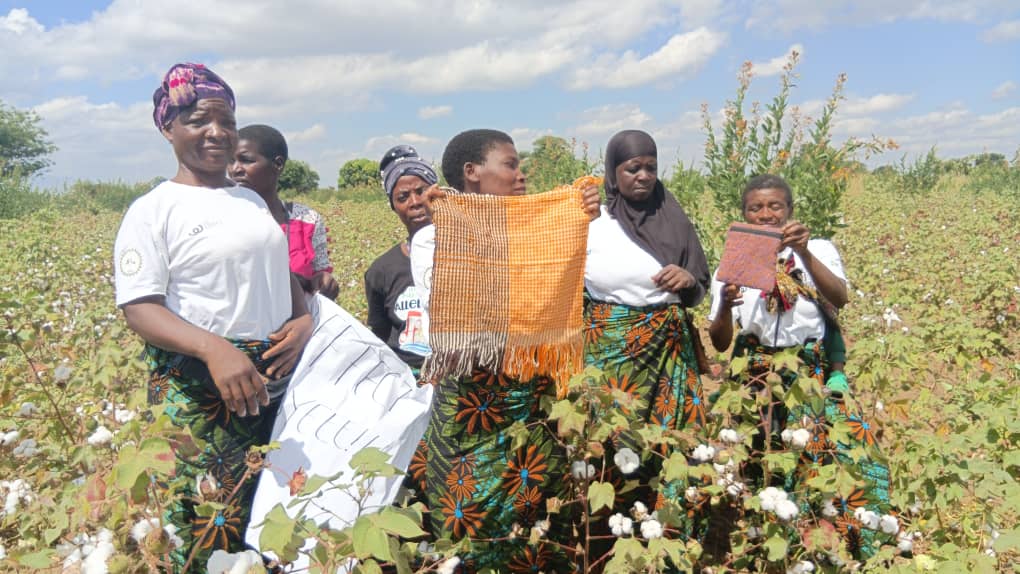
Women showcasing products of cotton farming (Photo Credit: Jenipher Changwanda)
He explained that diversification has become essential for survival, as farmers can no longer depend on a single crop due to unpredictable weather patterns.
“With Sesame, even when rains are not adequate, we are still able to harvest and earn an income. Cotton, when well-managed, also gives us good returns,” he said.
In Balaka, the WEE-CVC Project, is empowering women economically by enhancing their participation and benefits across the entire cotton value chain.