Is it necessary to celebrate 125 years of the Catholic Church in Malawi?
By Precious Nihorowa* CSSp
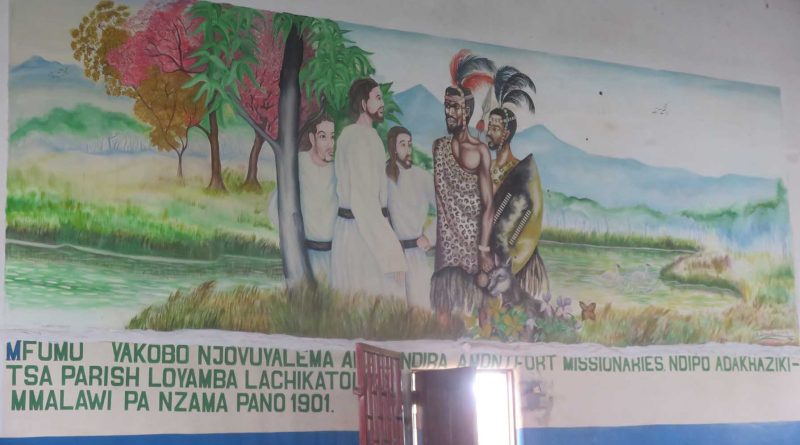
In July this year, the church in Malawi will be celebrating 125 years of existence since the first missionaries came to Malawi to plant the seed of Christianity on the soil of Malawi. Within the 125 years, so many things have happened: more people have been baptized and hence an increase in the number of Christians, more churches have been built to accommodate the growing number of Catholics, parishes have been expanded.
Furthermore, more schools and health facilities have been built as well as more socio-economic development initiatives have been introduced to cater for the holistic development of the human being. The impact that the church has made to the Malawian society is definitely there for all to see. As the preparations for the celebration almost reach a climax, a question worth asking is: is it necessary to celebrate 125 years of the Catholic church in Malawi? Does it hold any significance for the church?
Jubilee celebrations can be likened to the significance of birthday celebrations in the life of a human being. Such celebrations accord the celebrants an opportunity to introspect and reflect on why they were born, what difference they have brought in the lives of others and what contribution they have made to the development of the society. Similarly, the celebration of the 125 years is not just a time for the church to celebrate the coming of age of such a renowned institution but more to reflect on whether the church during the past 125 years has lived to the expectations of her founder, Jesus Christ, and strived to proclaim the Good News to all. And so, it is really necessary to celebrate the 125th anniversary of the church in Malawi.
The first reason why the anniversary is worth celebrating is to thank God for the so many graces and blessings to the church community in Malawi. When the first missionaries came to Malawi to preach the Gospel and establish Christianity, they met resistance from the locals especially chiefs who were very influential political leaders of that time. The missionaries were mistaken for the colonialists. Having suffered very much in the hands of the colonial masters, the local people suspected every white person and made sure they did not give them a chance to inhabit their land and oppress them.
And yet, apart from having the same continent of origin with the colonialists, the missionaries did not mean to oppress the local people. Today, 125 years later, the church is stable and missionaries can freely come to preach the Gospel, thanks to the resilience and persistence of the first missionaries. It is therefore a befitting moment to pay respects and remember missionaries who lost their lives in the struggle to establish the roots of catholic church on Malawian soil. As the second century Christian theologian Tertullian put it, “the blood of the martyrs is the seed for the church.” The blood that the missionaries shed really has become a seed for the continual existence of the Catholic church in Malawi.
Furthermore, the church has not just experienced the growth of her members, but also the growth in numbers of vocations to priesthood, brotherhood and sisterhood as well as those willing to be catechists. While formally the church in Malawi depended on missionaries to evangelize it, now they have their own local people evangelizing them. As if that is not enough, the church in Malawi is now sending missionaries to other countries. This is a significant growth. This means that the church in Malawi too is contributing to the evangelization of the Gospel worldwide.
Another reason worth thanking God for the Catholic church in Malawi is that it has become a social, economic, political and moral force to reckon with in the society. The Catholic church in Malawi over the years has truly demonstrated what it means to be salt of the earth and light of the world. On the socio-economic aspect, the church has constructed reliable health and education facilities hence providing quality service to the wider society.
The education system in Malawi would be unimaginable without the contribution of the Catholic church. On the moral and political aspect, the church has issued pastoral letters to call the society to conversion on some moral evils that the society has indulged in such as corruption, neglect of the common good, poor governance. It will always be remembered how the Catholic church in 1992 influenced the change in political governance and adoption of democracy in 1994. All this is worth thanking God for.
However, the 125th anniversary celebration of the Catholic church in Malawi is also a time of introspection and mapping the way forward. It is a moment of honestly asking ourselves whether the church has remained true to her mission of preaching the Gospel. In the face of many temptations, has the church not compromised her role of offering a prophetic voice to the society?
To what extent has the church deviated from her role of being the voice of the voiceless and bringing hope to the hopeless? These are very honest questions requiring very honest answers. If, through honest introspection, the church feels that there is more it has to do in speaking for the voice, they is the time to make a determination and renew its sense of responsibility towards the society especially the marginalized.
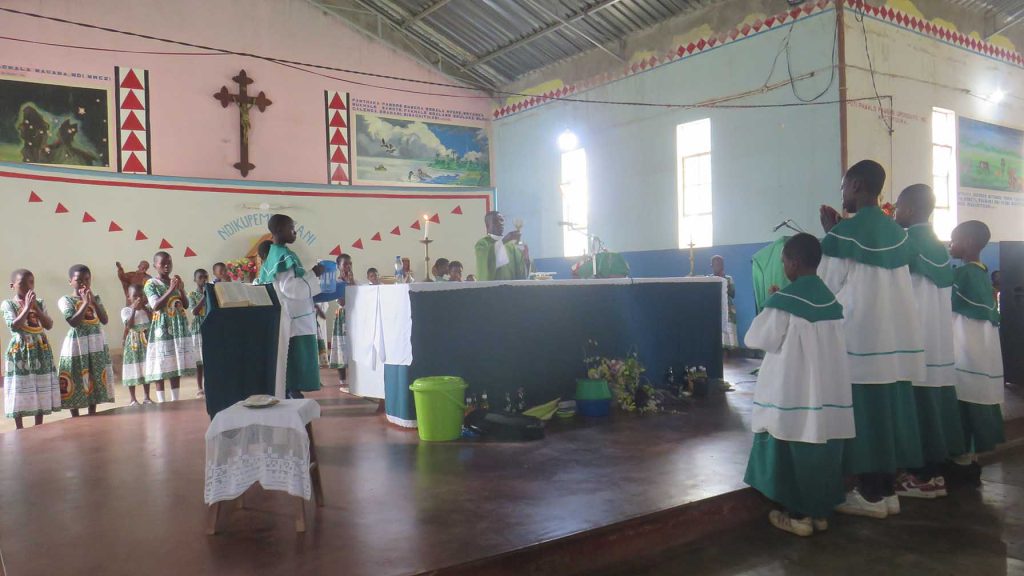
A church service at Nzama Parish (Photo Credit: Blessings Rex Mphamba)
Additionally, while the Catholic church population has grown to adorable levels over the past years, it is also good to ask whether the quality of faith of the Catholics is adorable too. Do the Catholic have a sense of Christian responsibility towards themselves, towards the society, towards others and towards the church? Are their lives exemplary in the Christian sense of the word? So, as part of renewal towards mission, I submit that the church has a number of aspects to ponder on.
The first aspect is inculturation. Up to now, 125 years later, many of our Catholics still combine Christian faith and traditional beliefs. We have a lot of Catholic who pray the rosary and faithfully go to the church on Sunday but still go to the witchdoctor the next day to look for solutions to their problems. This, in technical religious terms, is called syncretism. More often, the blame is put on the early missionaries for not using local cultural traditional customs to inculcate and teach Christian values to the people by finding points of intersection.
It is unreasonable to blame the missionaries up to now. We who are missionaries of today should honestly ask ourselves why syncretism still exists up to date. Have we done enough catechesis to the people? are our catechetical methods efficient and effective? Are we not simply going after more converts to the faith without worrying about properly catechizing them? There is a great need to deepen faith formation.
As part of faith formation, the church also needs to intensify evangelization to the youth as they are both the future of the church and society and so need to be inculcated with deep Christian values to influence their life. Family life also needs to be given adequate attention especially in an era where family values are getting eroded, divorce rates are high, and a lot of young people are shunning marriage. Family is the basic cell of the society as well as the future of the church. Its destruction is therefore the destruction of the society. The enforcement of LGBTQ movement mostly from Western countries and its subsequent imposition on Africa is also proving to be a threat to family life worldwide and Malawi in particular.
The last aspect is self-reliance in the church. When the missionaries came to preach the Gospel, they brought with them financial aid to uplift the economic situation of the people. Now that the European missionaries are gone, and that the church has come of age, it has to find its own means of sustaining its activities.
The shift from European missionaries to a locally-owned church brought some tensions and misunderstandings between the clergy and the faithful. The idea that the church now belongs to us even financially did not make sense to a lot of the faithful. At 125 years old, the church should seriously think about becoming self-reliant. While strides have been made on the same, more needs to be done.
*Fr Nihorowa is a regular contributor to The Lamp magazine