Malawi’s minerals sector requires drastic reforms to significantly contribute to national economy
By Marcel Chimwala*
Though Malawi’s mining sector contributes a staggering one percent to Gross Domestic Product, the country continues to make exciting mineral discoveries. These discoveries mostly by foreign listed firms include those of the much sought-after critical minerals by the world’s leading economic superpowers such as the United States of America and the European Union crucial for the new energy revolution.
The most exciting prospects include Kasiya Rutile-Graphite Project in Lilongwe where an Australian listed firm Sovereign Metals is conducting feasibility studies after discovering the world’s largest rutile deposit and the second largest flake graphite deposit, with mining expected in a few years’ time. Exciting enough, the company has just discovered rare earth minerals as part of the resource envelope at Kasiya.
The other major prospects include the Songwe Hill Rare Earths Project which UK Firm Mkango Resources is pursuing in Phalombe and the Kangankunde Rare Earths Project in Balaka. Australian-listed Lindian Resources is preparing to start mining works at Kangankunde, which is one of the largest rare earth prospects in the world, within the year.
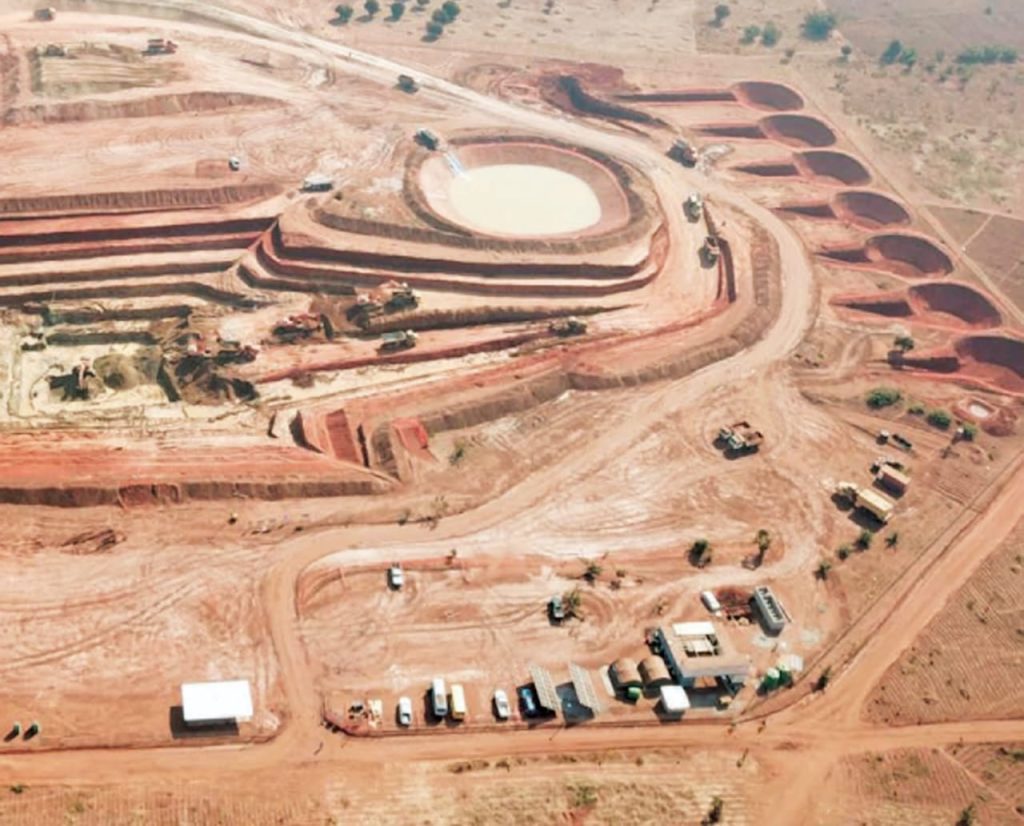
Mining trials at Kasiya rutile-graphite project in Lilongwe (Photo Credit: Mining and Trade Review)
Besides, there is the Kayelekera Uranium Mine in Karonga. Another Australian-listed firm Lotus Resources has just resumed uranium mining at Kayelekera after its predecessor Paladin Africa suspended production in the aftermath of the Fukushima Nuclear Disaster in Japan, which resulted in the closure of several nuclear plants in Asia hence a global price slump of the yellow cake.
Another advanced project that is moving into mining stage is the Kanyika Niobium Project in Southern Mzimba District bordering Kasungu where the resource firm Globe Metals & Mining is mobilising to launch mine construction.
Globe Metals already finalised feasibility studies and just like Mkango and Lotus, signed a Mining Develo-pment Agreement (MDA) with Malawi Government. Besides these projects, resource firms are pursuing several smaller ventures and potential large-scale mining projects at preliminary exploration level.
Benefits to Malawi Nation
The questions that click in the minds of many Malawians when there is talk about these projects are; how is Malawi benefitting or poised to benefit?
The Mines and Minerals Act (2023) has a number of clauses to ensure that Malawi benefits from mining projects. To begin with, the law includes a stipulation that the Malawi Government has the mandate to acquire shareholding in these projects as a minority shareholder. The Act gives the Minister responsible for Mining the authority to decide on the shareholding arrangement in coordination with the Minister of Finance.
Before the project reaches production stage, the Malawi Government negotiates and signs a Mining Development Agreement (MDA) with the resource firm which stipulates the shareholding percentage for the Malawi Government. Being a shareholder, the government is, therefore, entitled to get dividends from the mining company when the mine starts generating profits.
For example, in Kayelekera Uranium Mine which is in production stage, the Government has 15% shareholding while the MDAs for Kanyika and Songwe Hill give 10 percent free equity to Malawi Government.
Besides government shareholding, the other benefits for Malawi from a large scale mine as stipulated in the Laws and the signed MDAs include royalties charged at 5% of sales revenue from the mined product for industrial minerals such as these critical minerals.The Government also rakes in revenue through the 30 percent corporate tax and other taxes including Pay as You Earn and withholding tax.
In addition, the large-scale mining company is mandated to sign a Community Development Agreement (CDA) which commits the company to commit at least 0.45 percent revenue from the mine to development projects in the locality recommended by the local community.
On top of all these benefits, the large-scale mining project creates numerous jobs and business opportunities for skilled and unskilled Malawians mostly members of the local community since the Act mandates a large-scale mining company to prioritise Malawians in its recruitment. This is also reflected in the signed MDAs.
Current challenges in mining sector
With the current administration in power for over 100 days now, a number of challenges have continued to dog the minerals sector dashing hopes that the sector will play a key role in the nation’s industrialisation drive underlined in the national vision, Malawi 2063.
It appears despite continued political rhetoric on overwhelming potential of mining to transform Malawi’s economy, the action from the government in reforming the sector is not enough with the “as usual scenario” syndrome vivid.
There was indeed excitement from the Malawi public when State President Arthur Peter Mutharika announced a ban on export of raw minerals in order to maximise gains for the nation through export of finished products.
But the results of the directive has clearly shown that though the ban was made with a good intention to ensure local value addition in order to stimulate economic growth and increase job creation for the locals, it has largely worked as a political gimmick. Arguably, the situation on the ground has shown that the timing was wrong as the ban was made without any prior stakeholder consultation.
In addition, there are no guidelines for the implementation of the ban as the Government has just drafted the regulations for the implementation of the Executive Order this time after the ban had already negatively impacted local mining businesses.
Besides the ban, the other action by the new administration over the first 100 days is the appointment of the new Board of the Mining and Minerals Regulatory Authority (MMRA) and new Director General replacing those appointed by the previous administration.
Mutharika seemed to have scored highly in efforts to win investor confidence when he included former Minister responsible for Mining and current Coordinator of Chamber of Mines and Energy Grain Malunga in the board, which is responsible for overall governance of the minerals sector in Malawi, as Vice Chairperson.
But this action also seems to have diluted the role of the Authority in policing the private mining companies with Malunga also a Director for Lotus, running Kayelekera. Basically, how can a mine owner police the mine he owns? How can a Coordinator of the Chamber of Mines and Energy that represents the plight of the mining companies police the same companies? Such questions bring to light the Mines and Minerals Act 2023 which emphasizes on independence of MMRA.
The MMRA was created in the new Act, which was formulated by the previous Malawi Congress Party (MCP) leadership with little or no stakeholder consultations. They said the reason for amending the Mines and Minerals Act 2019, which was in force that time, was to remove hurdles in the process of granting mineral licences in so doing making it easy for mining investors.
Before MMRA took over this task, the Mineral Resources Committee which was headed by an official from the Ministry responsible for Mining and included officials from other Departments such as Environmental Affairs, Finance and the Police was responsible for granting of licences in accordance with the 2019 Act.
However, it appears other than meeting the objective for its formation which was to create sanity in the minerals sector, the formation of the MMRA has just created loopholes for political manipulation of the sector with any political administration appointing its royalists to head the Authority.
What Malawi needs to do
The “doing things as usual attitude” will not help the sector to grow. Malawi Government needs to react to current global mineral market trends and implement measures to ensure that the nation adequately captures the benefits of the sector.
With the world’s superpowers jostling for critical minerals that Malawi is endowed with, it is important for Malawi to formulate a Critical Minerals Policy now that will help the country adequately benefit from these mineral resources.
The global scramble for these minerals including those important for the green energy revolution must not just be left with the foreign listed firms. With other governments including economic superpowers such as the United States and Australia partnering private companies to pursue mining projects for critical minerals, Malawi Government also needs to invest in this direction.
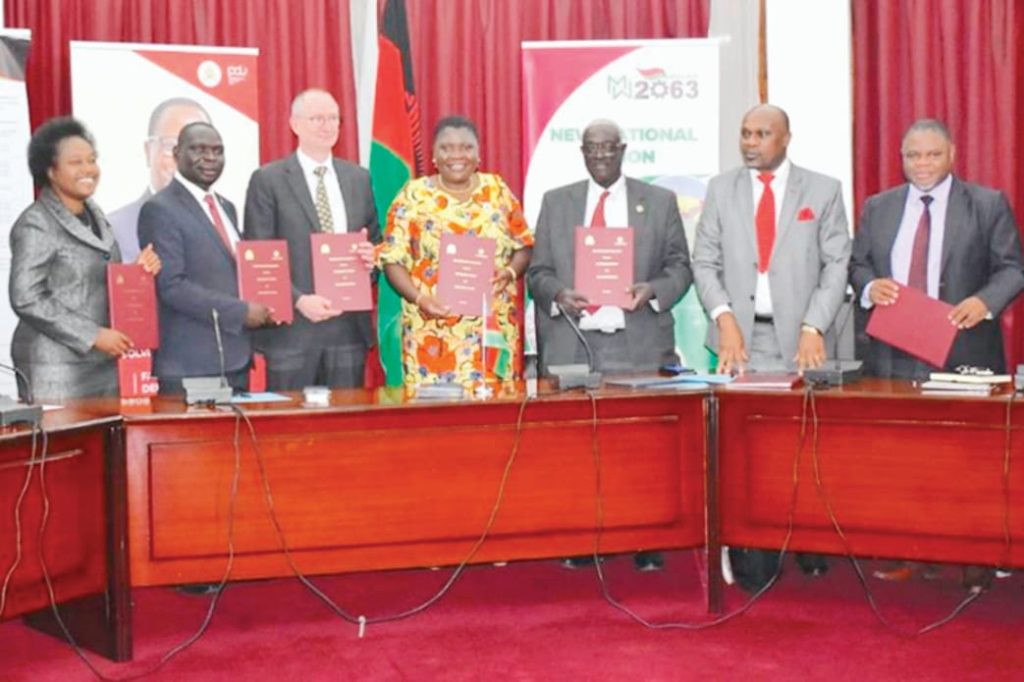
Former minister of mining, Monica Changa’namuno (centre), government and Lotus Resources officials during the signing of Kayerekera Mine Development Agreement (Photo Credit: Mining and Trade Review)
State-owned Malawi Mining Inve-stment Company (MAMICO) needs to be given sufficient funds to pursue mineral prospecting ventures for the critical minerals and also partner private companies involved in prospecting projects.
In order to create sanity in the sector, it is also important to revert to the previous Mines and Minerals Act 2019… The current 2023 Act, developed without adequate stakeholder consultation, has created chaos in the sector, which is an impediment to growth and by giving much powers to the Minister carries similar traits to the abolished 1981 Act which gave absolute powers to the Life President.
The MMRA, which was created by the new Act, seems to be handling the duties which were under the jurisdiction of the Department of Mines and Geological Survey Department (GSD) which is creating chaos in the sector.
In the 2023 Act, there is also this issue of giving a line Minister powers to decide on whether Malawi Government should acquire a percentage of free equity or not and the amount in a specific large scale mine. This is a glaring loophole for corruption created by politicians to make quick gains from mining projects. It is dangerous for the country and stakeholders including some mining companies raised concern over it.
We must remove this and revert to a law that specifies a percentage of free equity for government in a large scale mine as is the case with the abolished 2019 Act which gives the right to government to acquire at least 10 percent free equity in a large scale mine. Such a provision in the 2019 Act was investor friendly as it assured security of investment with the investor knowing beforehand the amount of equity to be offered to government.
On the ban, it is important for Government to expedite the process of developing regulations and gazette them as soon as possible to do away with the madness the ban has created so that the sector, including Artisanal and Small-Scale miners who are heavily impacted, continues to move ahead.
Mining can indeed significantly contribute to economic growth if drastic reforms are implemented.
*Chimwala is a seasoned Malawian journalist, publisher and proprietor of the business publication Mining and Trade Review.