Patriotism: Do we have enough of it to drive the Malawi 2063 Agenda?
By Christopher Naphiyo*
In 2021, Malawi launched its long-term development strategy, the Malawi 2063, that replaced Vision 2020, which had run its rugged course premised on many attractive aspirations and reasonable approaches but some argue that it was tainted by wrong attitudes and limited political will. The politically charged atmosphere within the vision’s timeframe derailed its implementation since each government that came into power had its own agenda, detached from the vision.
The current blueprint aims to transform Malawi into an inclusively wealthy and self-reliant nation by 2063. In order to attain this vision, the strategy has prioritized cultivation of a culture of positive values such as patriotism, integrity and building positivity, among others.
To cultivate a culture of positive values as espoused in the Malawi 2063 blueprint, there has been a growing realization that the country needs to come up with a mechanism to revitalize and re-invigorate its individual and collective conscience through a new dialogue and action on the understanding and practice of the notions of ethics, integrity and patriotism.
Patriotism is a key tenet in achieving our aspirations and targets as a nation. It entails loving and willingness to defend one’s country. Implanted in the fundamental principal of patriotism are such sub-values as: a sense of nationhood, loyalty, national pride, respect, tolerance, unity, hard work, civic responsibility, respect for constituted authority, respect for national symbols and upholding the spirit, and a sense of the future. National patriotism is typically measured by citizens’ beliefs in their country’s superiority or their willingness to defend it.
Sadly, Malawi appears not to have these in the desired supply. The limited patriotism in our nation has resulted in a dysfunctional behaviour demonstrated by citizens. National challenges such as corruption, intolerance, tribalism, selfishness, lack of productivity in the public service and marginalization in the public and private sectors, have fashioned deep-rooted gulfs within us as a people. Government on its part is obliged to stimulate and fortify citizens’ sense of belonging beyond ethnic boundaries to bridge the patriotism and nationalism gaps. This is continually being a failed scheme.
The country’s constitution emphasizes enhancement of key values namely; national unity, discipline, integrity, tolerance, peaceful co-existence and patriotism for all Malawians. Genuinely embracing the value of patriotism will benefit this nation in so many ways such as the generation of a sense of pride in the Malawian state.
Much as the displaying of the national flag and court of arms in public premises is a practical application of the value of patriotism, this attitude also needs to be manifested in the Malawian citizenry by being law-abiding, respectful of other people’s rights and the seeking of lawful means of redress when aggrieved.
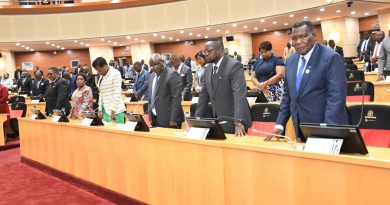
One of the major ways in which citizens manifest patriotic allegiance to their nation is through participation in elections. The election of representatives to champion policy making at national and local levels is a great manifestation of patriotism. The value of personal responsibility enforces quality of political representation amongst elected and appointed public officials and generally stimulates overall development.
Malawi had elections in September 2025. True patriotism results in the election of upright, honest, principled and responsible persons to political offices because our choices are based on competence, integrity and qualification for public officials and as opposed to narrow-minded attitudes such as tribal, religious or political bias or due to monetary or other kinds of inducements.
Obviously, there are grains of truth in these thoughts because patriotic leadership does yield patriotic followers. Thus, leaders should learn to sacrifice and truly serve their nation and this encourages citizens to follow and go the extra mile for their nation. Those employed to provide or deliver public services for flagship projects and programs have demonstrated undesirable behaviours by plundering resources that have been entrusted to them.

Malawi Revenue Authority headquarters in Blantyre (Photo Credit: MRA)
Volunteering for common good is another critical aspect of patriotism. Malawians seem to have thrown this down the drain in the wake of the agitation for multi-partyism. The concept of Youth Week and other attendant voluntary commitments require adequate reflection at this turn of Malawi’s history as we reflect on patriotism as a very crucial factor for national development. Some policies and practices have commercialised what should be manifestations of patriotism. Citizens should not always expect to be paid for doing something that is for the common good.
Malawi continues to reel in the dark shadows of ‘tractor-gate’, ‘cash-gate’, ‘maize-gate’, ‘fertilizer-gate’ and other national scandals due to limited levels of patriotism and have ended up limiting public resources for their private use and benefit through manipulated accountability mechanisms. This erodes the very essence of democracy. Custodians of public resources and facilities must be held to account in a democracy and this is done through a myriad of approaches. Consistent and objective use of these approaches is a sign of a deep sense of patriotism.
Issues of corruption have always been thrown into the realm as examples; the arguments peddle top public and private sector officers as being the most corrupt and that preaching anti-corruption to ordinary citizens is like taking circumcision messages to the already initiated. Patriotic citizens will take positive steps towards eliminating corruption which includes reporting on any suspected acts to the authorities rather than glorifying corrupt persons with terms like ‘biggie’, ‘munthu wamkulu kwambiri.’
Patriotism bears personal responsibility which in turn blooms into discipline, respect, commitment and self-control. For the private sector that would manifest itself in providing goods and services that meet acceptable international standards when doing business with public interest institutions. In this context, public servants shall be indulged to pursue the public before personal or private interests through maximum commitment to duty and stewardship of public or common good.
The citizenry need to uphold national values individually and collectively for the good of the corporate existence of the nation, while showing great commitment to duty, selflessness and patriotism in daily life that includes honouring taxation requi-rements which are evaded by most citizens given the choice. Tax, whatever form it takes, goes a long way in resourcing national development, hence all Malawians should look out for opportunities to make a contribution towards broadening the national tax purse, this being a great display of patriotism.
Globally, one of the most interesting measures of patriotism came from the International Social Survey Program, which measured patriotism in two complementary surveys. One measured general national pride, but included several edgier questions that bordered on nationalism. The other measured domain-specific national pride, which focused upon the nation’s accomplishments and qualities. Morocco, Fiji, Pakistan, Vietnam and Bangladesh featured highly among countries whose citizens indicated strong willingness to fight for their countries under this survey. It would be exciting to explore how many Malawians would demonstrate such willingness.

Youths can help to drive the Malawi 2063 Agenda (Photo Credit: Internet)
Based on the 2024 YouGov Survey, which is one of the most recent major global index on a specific element of patriotism, countries are ranked by the percentage of citizens who believe that their nation is “the best in the world”. The United States of America, India, Australia, Thailand, Saudi Arabia and the Philippines ranked highly on this index.
Patriotism shall genuinely craft a Malawian citizenry who are truly loyal to the nation, and abide by the laws of the state, while displaying team spirit in relationships with colleagues; displaying trustworthiness and dependability in accomplishing official duties and tasks.
As a matter of institutionalizing this element, the government of Malawi needs to consider establishing a directorate of ethics, integrity and patriotism under the Office of the President and Cabinet to propel Malawians to pull in one direction and enable them to achieve greater heights of nationhood. This includes guidelines for political conduct and communication because politicians have been known for ruthless behaviour that threatens patriotism in its various forms.
In conclusion, in order to inculcate the spirit of patriotism to upcoming generations, government and all concerned stakeholders must assume the role of bringing back sanity among the youth even if it means dictating some crucial mindset elements of the national youth service as well as fast-tracking the establishment of patriotism clubs in secondary and tertiary institutions of learning.
*The author is a governance and civic education practitioner working for National Initiative for Civic Education (NICE) Trust, writing in a personal capacity.