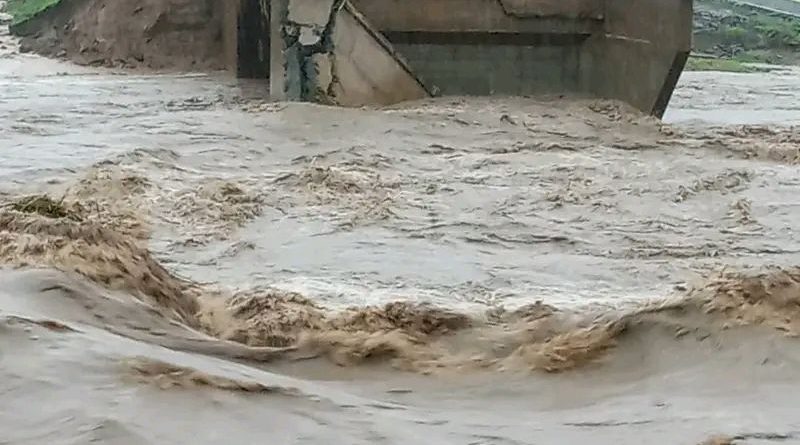
Why poor roads in Malawi?
By Dyson Mthawanji*
Malawi’s road network is the backbone of its economy, facilitating the transport of agricultural goods, which account for over 80 percent of exports, and enabling access to markets for smallholder farmers who produce 90 percent of the nation’s food. With approximately 16,000 km of roads—only 29 percent paved—the sector supports Gross Domestic Product (GDP) growth by reducing logistics costs, which currently consume 30-40 percent of Malawi’s GDP due to inefficiencies.
Reliable roads enhance trade with neighbours like Zambia and Mozambique via corridors such as the Nacala and Songwe routes, boosting sectors like tobacco, tea, and mining.
Roads underpin Malawi’s agrarian economy, where the majority of the population relies on agriculture. They connect rural farms to urban markets, cutting transport times and post-harvest losses for perishables. Improved infrastructure has historically driven growth: the 2010s Shire Valley Road upgrades increased farmer incomes by 25 percent through better market access. Foreign investment in mining and manufacturing also hinges on roads. Without robust roads, Malawi’s goal of upper-middle-income status by 2063 remains elusive.
Despite this background, Malawi’s roads suffer from chronic underinvestment and environmental vulnerabilities. Many roads are built with substandard materials, leading to rapid potholing. Only 5,000 km are surfaced, and heavy rains erode unpaved sections, rendering 40 percent impassable during the wet season.
Poor road conditions in Malawi, characterized by deep potholes and deterioration, are a critical challenge severely hindering transportation, economic growth, and safety, with over 3,000 traffic accidents and nearly 400 fatalities reported in 2023. Key routes like the M1, M5, and M10 are plagued by damage, largely due to aging infrastructure, limited maintenance funding, and susceptibility to climate-related damage, particularly in rural areas.
There has been a public outcry about poor conditions of the roads in Malawi. Many people attribute poor conditions of the roads to poor workmanship and corruption. Some of the roads are new but already poorly damaged.
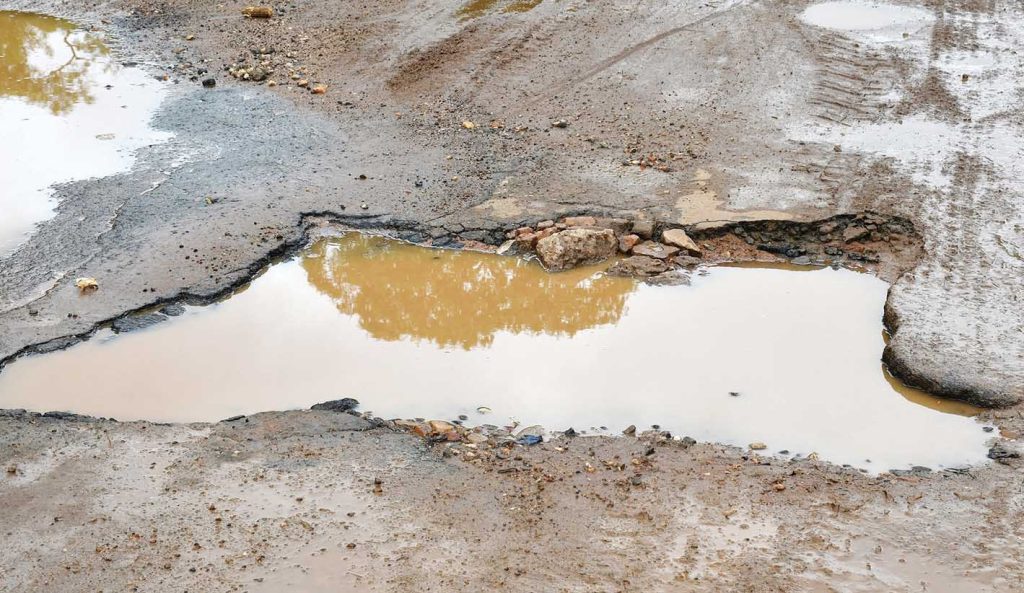
Potholes are a reflection of poor workmanship (Photo Credit: Internet)
Transparency International has released results of corruption perception for 2025 for countries. Malawi has scored 34 on the Corruption Perception Index. “The country ranks 109 among 182 countries meaning that we are not doing good enough to end corruption. Construction sector contributes to corruption activities in Malawi. The construction sector is submerged in all manner of fraud, bribery and related malfeasance,” writes Mavuto Bamusi in column in Weekend Nation dated 14 February, 2026.
The Nkhufi Road which connects Kasungu and Nkhotakota Road through the game reserve is the best example of roads whose construction has remained questionable. The road literally got peeled off layer by layer until it degenerated into the current hazardous impassibility.
Bamusi said that several factors can explain this sad state of affairs in the construction sector. However, para-mount is the issue of corruption which takes a toll beginning from the manner in which construction firms are registered. The Construction Industry Regulation Authority (Cira) formerly called National Construction Industry Council (NCIC) has more work to do.
It is alleged that Malawi has some contractors who have no slightest qualification in the industry. According to Bamusi, some contractors own a company certificate yet with no clue of what are the correct types of soils for road construction. Corruption in procurement, lack of transparency at the tendering stage, and award of bids to politically connected entities are aggravating factors.
Bamusi said some contracts are awarded based on bribes thereby compromising on infrastructure quality.
“At the height of the infamous 2013 Cashgate Scandal, there were contractors that existed on paper only. Such grand corruption, high level fraud and thievery meant that public funds are spent on roads, bridge that are never delivered,” he said.
Corruption in the construction sector continues to slow down economic progress and reverse developmental gains.
Malawi should take strong anti-corruption action and institute solid accountability reforms targeting the construction sector. The implication of the analysis is that ensuring paved roads can provide significant benefits to the Malawian economy. The intervention will increase international tourism receipts by 30 percent.