Book Review: PHUTHUMA NHLEKO,
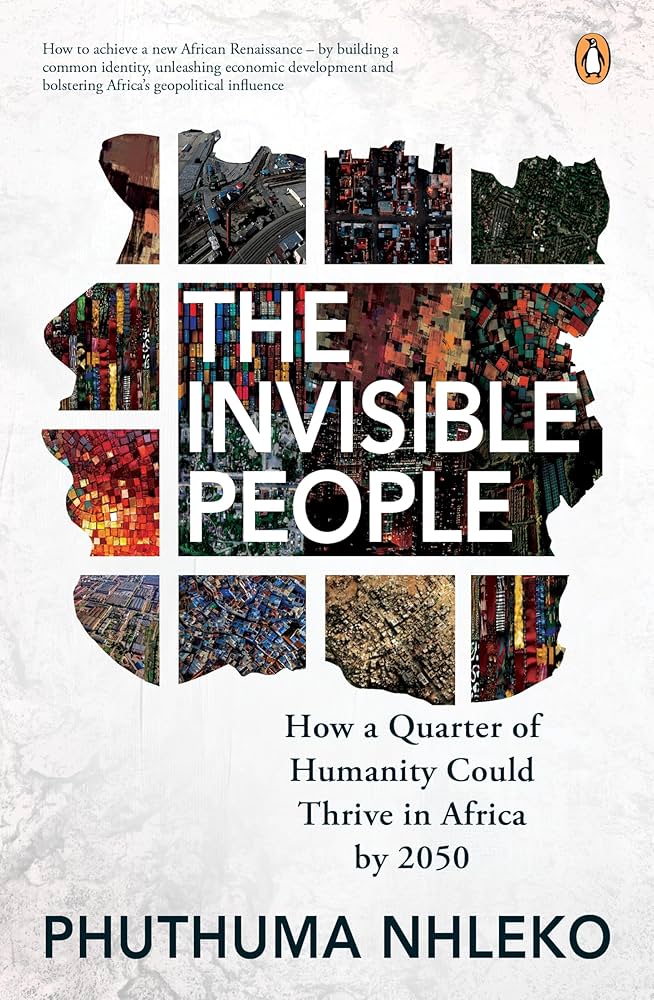
THE INVISIBLE PEOPLE, How a Quarter of Humanity Could Thrive in Africa by 2050, Penguin Books SA, 2026, pages 272.
By Fr Piergiorgio Gamba
Africa’s population will double to 2.5 billion by 2050. Afro-pessimism has long shaped the continent’s narrative. The book opens by explaining how, for many people on the so-called dark continent, the weight of history has not fully lifted. Africa’s complex and often misrepresented past still shapes how the continent sees itself and how others see it. This legacy constrains talent and suppresses potential, reinforcing a form of mental indenture that is difficult to dismantle.
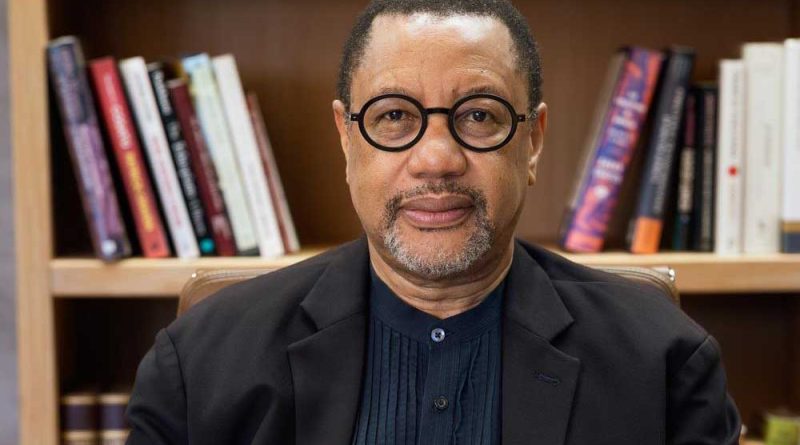
Nhleko, a South African corporate executive, approaches the subject with the perspective of someone deeply embedded in Africa’s economic evolution. He traces how these historical injustices continue to shape contemporary perceptions, in Africa and abroad. Centuries of colonial exploitation have created patterns that still influence social, political and economic structures. He emphasises that the continent’s struggles are not solely the result of internal failings but are deeply intertwined with external pressures and systemic inequities.
Despite repeated challenges, African societies have demonstrated remarkable resilience, adapting and contributing richly to human progress. The author poses the central question: how can 2-billion Africans, almost twice the population of China now, create viable economies, sustain themselves, participate more fully in global trade and contribute to the world at large? This question frames the book, guiding Nhleko as he interrogates the past and articulates a remedy.
The book is structured in three parts, each focusing on a critical dimension of Africa’s future: identity, economy and geopolitics.
Part one examines identity and considers how Africans, on the continent and in the diaspora, can reposition themselves to move beyond their position at the bottom of the global hierarchy. Nhleko reflects on how Africa’s sense of self has suffered profound dislocation, causing a near-fatal fracturing of its collective identity. Yet this fractured sense of self is not the continent’s only defining characteristic. He explores how Africa has been persistently misunderstood, often reduced to a homogenous mass. A telling example is that of a foreign business requesting that an advertising campaign be translated into “African”, as though it were a single language spoken uniformly across dozens of countries. Such misconceptions flatten the continent’s complexity.
Yet Nhleko also reasserts Africa’s rich heritage and its profound contributions to civilization. By the end of this section, readers gain a deeper appreciation of Africa’s influence on religion, art, culture and music. They come to understand how the systematic denial or minimization of these contributions has eroded the continent’s perceived relevance and weakened its standing in the global order.
Part two turns to Africa’s economic landscape. Despite its vast mineral reserves, fertile land and abundant gas and oil, the continent has yet to translate these resources into widespread prosperity. Nhleko examines why Africa remains marginalized in the global economy, a position shaped by historical patterns and deliberate external influences. Colonial-era trade structures, extractive practices and financial systems were designed to benefit external powers, and many of these patterns persist, limiting Africa’s ability to fully harness its wealth.
“Africa remains on the periphery of the global economy,” he writes, citing low trade volumes, a tiny share of foreign direct investment, and less than 1% of global financial assets under management. These figures are compounded by elevated risk premiums, underdeveloped capital markets and economic systems that still reflect patterns established during centuries of colonial rule. Even where resources are abundant, governance challenges, infrastructural gaps and unequal access to global markets continue to constrain economic growth.
Yet Nhleko does not dwell solely on limitations. He offers guidance on how this trajectory can be altered, emphasizing structural reforms and grassroots innovation. He highlights emerging opportunities in technology, finance and entrepreneurship, alongside Africa’s considerable natural wealth in minerals and arable land. The continent is leveraging digital payment systems, fintech solutions and mobile platforms to reshape economic activity and realise its full potential. These innovations illustrate that Africa can outpace expectations, create new pathways for growth and reclaim a position of influence in the global economy.
Part three examines Africa’s position in global geopolitics. Despite being the second-largest continent on Earth, Africa has limited visibility on the world stage. Nhleko notes that “Africa re-mains the dark continent dee-med to be of little relevance in global affairs, geopolitics, de-fence and commerce”. This peripheral position is supported by trade statistics, low representation in international institutions, and minimal influence in shaping global policy.
One potential solution lies in forming coalitions and strategic partnerships. While Nhleko is skeptical about the effectiveness of the AU in achieving transformative impact, he highlights the… comprising South Africa, Ethiopia, Nigeria and Algeria, and other similar initiatives as examples of how coordinated action can begin to strengthen Africa’s global standing. Collective efforts at the continental level, as well as collaborations with international partners, could strengthen Africa’s geopolitical influence. Nhleko emphasizes that these alliances are not merely symbolic; they have the potential to reshape Africa’s economic, diplomatic and security position, giving the continent a stronger voice in shaping global norms and decisions.
Nhleko remains true to the book’s intent, stating, “This book is intended to be a conversation. My hope is that readers on the other side of this conversation will be spurred into a search and reflection of their own.” Throughout, he weaves personal experiences and concrete examples, making complex economic, social and geopolitical analysis accessible and relatable. The book provides guidance for tangible steps towards a more prosperous continent, highlighting challenges and opportunities, and inspiring readers to consider how Africa’s vast potential can be harnessed.
What distinguishes The Invisible People is its refusal to accept conventional narratives about Africa’s place in the world. Nhleko challenges readers to move beyond sympathy or pity and instead recognize Africa as a continent poised for transformation.
His analysis is deeply rooted in historical context, tracing how centuries of exploitation and external interference have shaped the continent’s present position.
However, this extensive focus on the past leaves less room for examining the role of contemporary African leadership in perpetuating or addressing these challenges. The book’s emphasis remains predominantly on historical grievances and external factors.
Yet, by confronting uncomfortable truths about the past while articulating a compelling vision for the future, Nhleko offers a starting point for how a quarter of humanity can move towards thriving and contributing meaningfully to global progress.