Where did the winners get their votes in 2025 General Election?
By Christopher Naphiyo*
As dust settles on the 2025 General Election results, and Malawians ponder on their heightened sense of agency in democratization processes, it is important to sink deeper into the analysis of the outcome. Malawians exercised their democratic right to effect a significant political change by voting out an incumbent president and ruling party.
Some have even argued further that the election has signaled a significant shift from regional voting patterns as they look at the presidential results. Whatever the case, Malawi’s 2025 democratic governance journey through the general election strikingly mirrors the nation’s evolving political maturity and collective aspirations for accountable leadership.
This assertion needs to be proven by assessing all the results, and not just the presidential vote which clearly shows that the Democratic Progressive Party (DPP) went beyond the region that is considered its stronghold to claim the whole Northern Region and sections of the Central Region.
Malawi’s 2025 General Election resulted in the peaceful transition of power with Peter Mutharika returning to the presidency after a five-year break. The country registered a reasonably high voter turnout that signified strong citizen enga-gement in spite of economic adversity and widespread frustration over governance and socio-economic factors.
The question that this article intends to illustrate and clarify is to indicate where the winners in all the three positions that were being contested for, secured their votes and what this signifies with regard to Malawi’s democracy. Are Malawians maturing in ideology or is it still the same regional and ethnic song?
To begin with, for the presidential election, the results show that secured more votes than the other contenders in all the seven councils in the Northern Region, namely; Karonga Town, Likoma, Rumphi, Mzuzu City, Mzimba, Karonga and Chitipa. This signified loss of trust in the Malawi Congress Party (MCP) as well as its former alliance partners, unlike the case in 2020 when all the councils in the North preferred the Tonse Alliance led by the MCP.
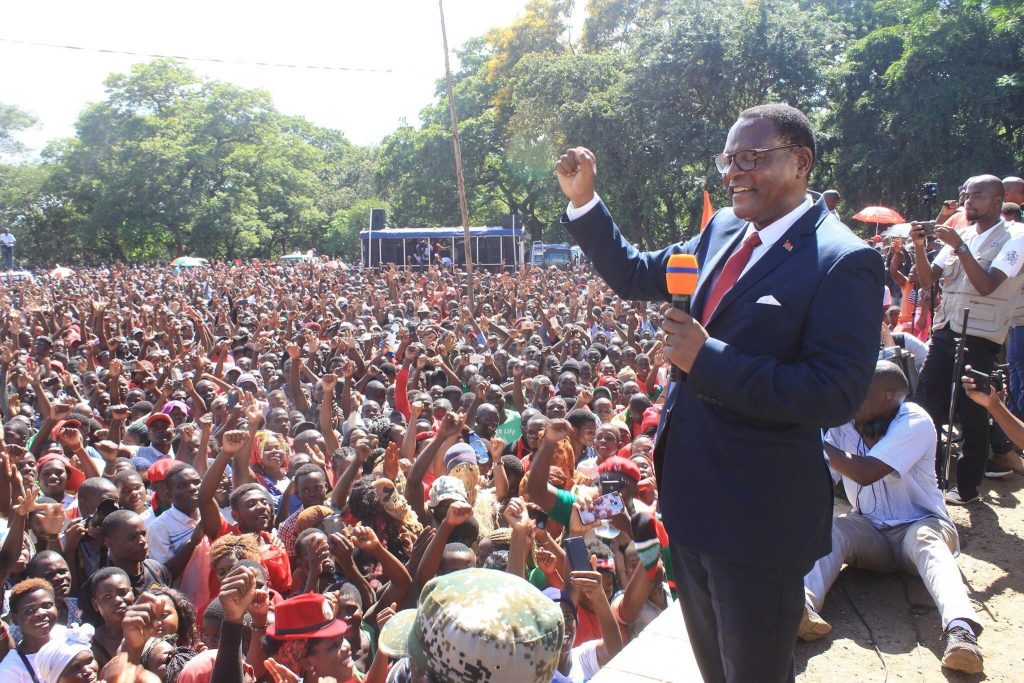
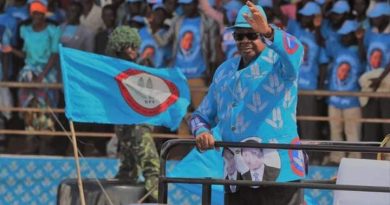
Chakwera lost in last year’s presidential election (Photo Credit: Internet)
Not so surprisingly, Mutharika managed to triumph over Chakwera of MCP and the other contenders for the president’s seat in sixteen councils in the Southern Region, namely: Zomba City, Neno, Luchenza Municipality, Mulanje, Machinga, Chikwawa, Nsanje, Zomba, Blantyre City, Balaka, Thyolo, Phalombe, Blantyre, Mangochi, Mangochi Municipality and Chiradzulu.
In the race for the National Assembly, while the DPP got 63 seats in the Southern Region, it only managed 7 in the North and 9 in the Centre. DPP consolidated and retained seats in parts of the North, for example, Nkhata Bay North and West, Likoma and some few Central Region constituencies.
The stronghold factor is clearly demonstrated and this may signify the long-standing issue of voting along regional or ethnic lines and DPP needs to work on this in future elections to illustrate that it is indeed a genuinely national entity.
Additionally, it is important for MCP and the other parties to strategise meaningfully for future elections so that they secure more seats in the South in the same way that DPP managed to get few in the Centre and North.
On the other hand, MCP got 43 seats from the Centre, and managed to get 7 in the North and only 2 in the South. MCP held or gained ground in several Central Region seats, namely, Kasungu, Nkhotakota, parts of Mzimba, but not enough to rival DPP’s national total. For MCP, this demonstrates its regional based support, which must be extended to the South, if it is to be declared a truly national party.
The Independents were distributed across the country, but concentrated in the Centre at 37; whereas 13 are from the North and 24 from the South. The Independents performed particularly well in all regions, with typical examples being in Rumphi, Mzimba, Mzuzu City, Kasungu and Nkhotakota, often defeating party heavyweights in those electoral areas.
Again, it illustrates that the major parties had intra-party problems in their primary elections that compelled some of those frustrated at this level to seek election as independents.
Additionally, Alliance for Democracy (AFORD) only managed to get its only 2 seats in the North whereas UDF got 4 seats in the South. UTM Party’s seats were distributed as follows; 4 in the North; a single one in the Centre and 3 in the South. People’s Party (PP) got 2 seats in the North and 1 in the Centre, whereas Freedom Party (FP) got its single seat in the North. The National Democratic Party (NDP) secured its only seat in the North and People’s Democratic Party (PDP) got its only seat in the South.
Smaller parties such as PP, AFORD, UTM Party, FP, NDP and PDP secured pockets of influence, especially in areas where their leadership originates from. Overall, the results for the 224 constituencies where the elections had taken place on 16th September 2025, with the following distribution of seats in the National Assembly: the DPP secured a total of 79 seats which was the largest single party, but below the 115 seats needed for a simple majority in a 229 member House.
Independents secured a total of 73 seats, making them collectively almost as large as DPP and a decisive bloc for coalition building. On the other hand, MCP got 52 seats, down from its position as the immediate past governing party.
The other parties, namely; UTM, PP, AFORD, UDF, FP and others shared the remaining seats, mostly in single digit or low double digit ranges, reinforcing a highly fragmented parliament.
On the local authorities front, for the wards where the election was conducted, DPP grabbed a total of 246 seats with the following breakdown in terms of regions; 24 in the North, 35 in the Centre and 187 in the South. MCP followed with a total of 135 wards with 26 being claimed in the North, 108 in the Centre and a single one in the South, specifically in Mwanza.
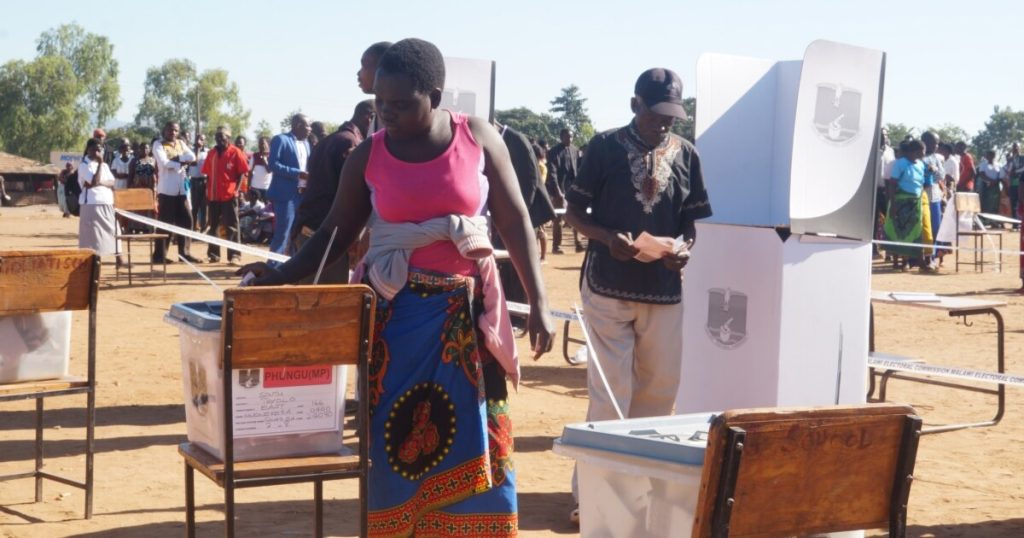
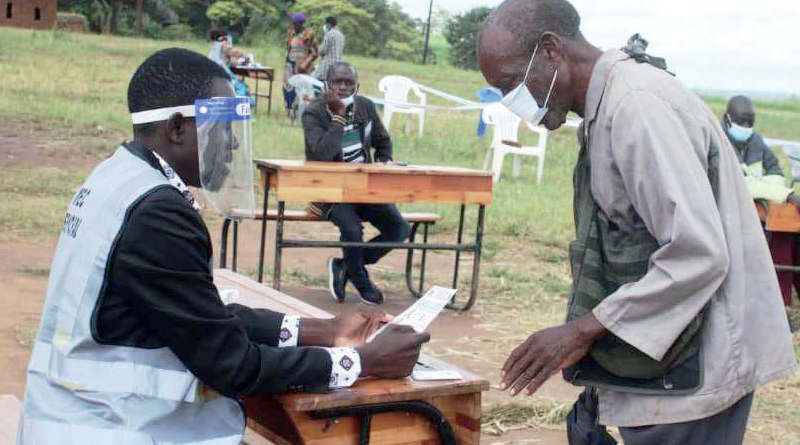
Voting to elect representatives (Photo Credit: Internet)
The other surprise package was that of independents who claimed a total of 81 wards; 20 in the North, 34 in the Centre and 27 in the South. The high numbers of independents in areas known to be strongholds of MCP and DPP is an indication of the declining levels of intra-party democracy because these independent candidates did not originally wish to context as such. This followed botched and manipulated primary elections that frustrated some members of their respective folds.
The other parties shared the remaining seats as follows; UTM grabbed a total of 14 seats as follows; 11 in the North, 3 in the Centre and none in the South. UDF managed to scoop 7, with none in the North, a single one in the Centre and 6 in the South.
PP got 3 seats, 2 in the North and the third one in the South. NDP got 3 wards, 2 in the North and the third one in the South. Odya Zake Alibe Mlandu got a single ward in the North in Mzuzu City; whereas AFORD scooped a single local council seat in the North. Anyamata, Atsikana ndi Amayi Party got a single ward in the North in Mzuzu.
It is interesting to note, but not surprising, when the 2025 General Election results are analysed further into party seats per region, an indication that the picture painted by the presidential results of breaking regional barriers is not sufficiently reflected in the parliamentary and local government election results where the regional fragmentation is so pronounced.
It clearly shows that political parties, with the endorsement of all Malawians must collectively work towards creating a sense of oneness and nationhood so that every political party has footprints across the country instead of having ethnically fragmented affiliations. Normally, after major elections, most parties go into a political hibernation instead of doing research and identifying their strengths as well as gaps and immediately hatch strategies to make their parties wear a national complexion.
*Naphiyo is a governance and civic education practitioner working for NICE Trust, writing in a personal capacity.