Years later, change lives on in Balaka District
By Jenipher Changwanda
Falesi Kamowa, a member of Mgwirizano Chicken Club at Makoloje in Mpilisi Extension Planning Area (EPA), vividly remembers how Tropical Storm Anna ravaged their crops in 2021, plunging many families into hardship.
For communities living in this semi-arid area, the disaster acted as a threat multiplier. Already struggling with erratic rainfall and prolonged dry spells, villagers watched their livelihoods crumble as floodwaters swept away their fields.
Kamowa recalls the devastation the storm left behind.
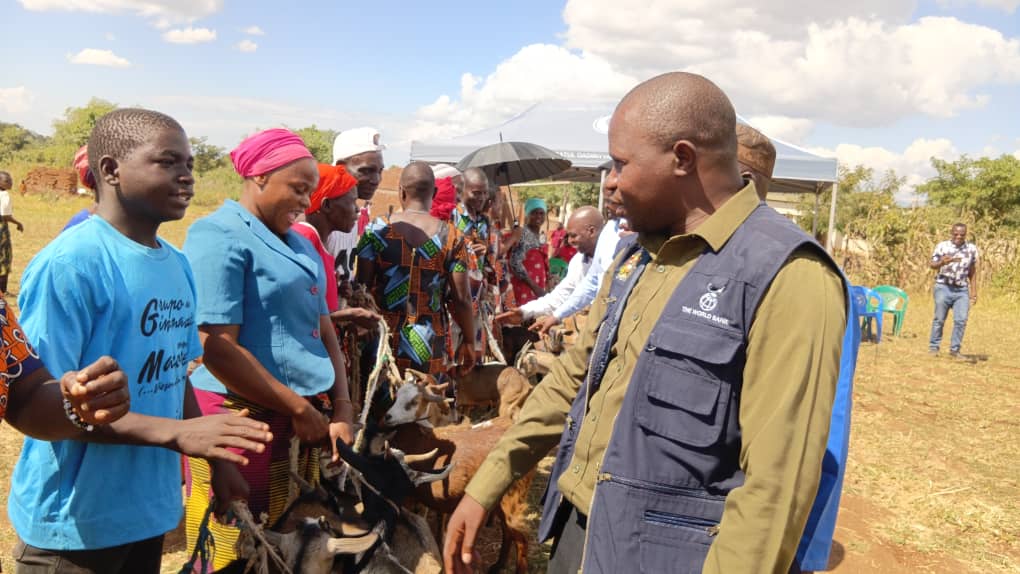
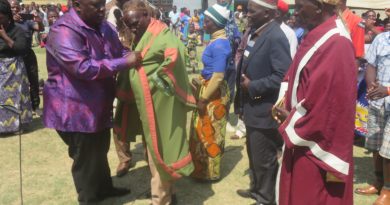
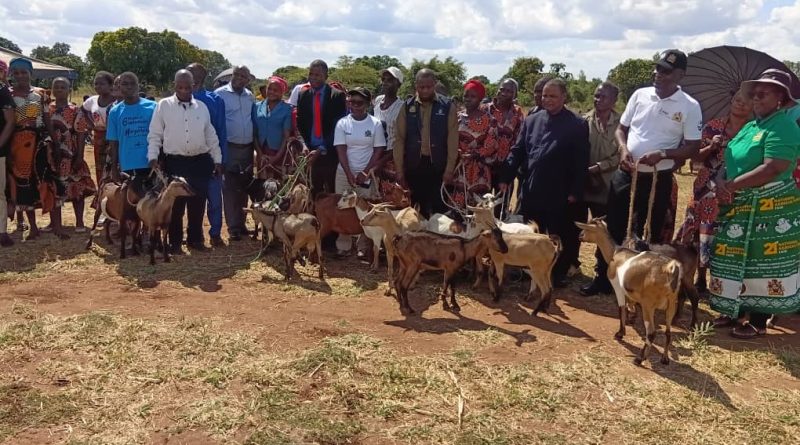
“Please take care of the goats you have received. This is your future.” District Commissioner for Balaka, Bibu Yusufu Mdala tells a young beneficiary of the Pass-on Model at Jana Village
“Tropical Storm Anna pushed us deeper into poverty. The floods destroyed our crops, which are our main source of livelihood. We were left with nothing,” says Kamowa while speaking to visitors who had come to witness a chicken pass-on activity in the village under Sustainable Agricultural Production Programme (SAPP II).
Over the years, Malawi has endured a series of climate change-induced disasters. Tropical Storm Anna, Cyclones Idai, Gombe and Freddy, as well as the El Niño-induced drought, have left communities struggling to recover from repeated economic shocks.
According to Dialogue Earth, Malawi’s Department of Disaster Management Affairs (DoDMA) estimates that disasters between 2015 and 2023 cost the country approximately US$1.19 billion.
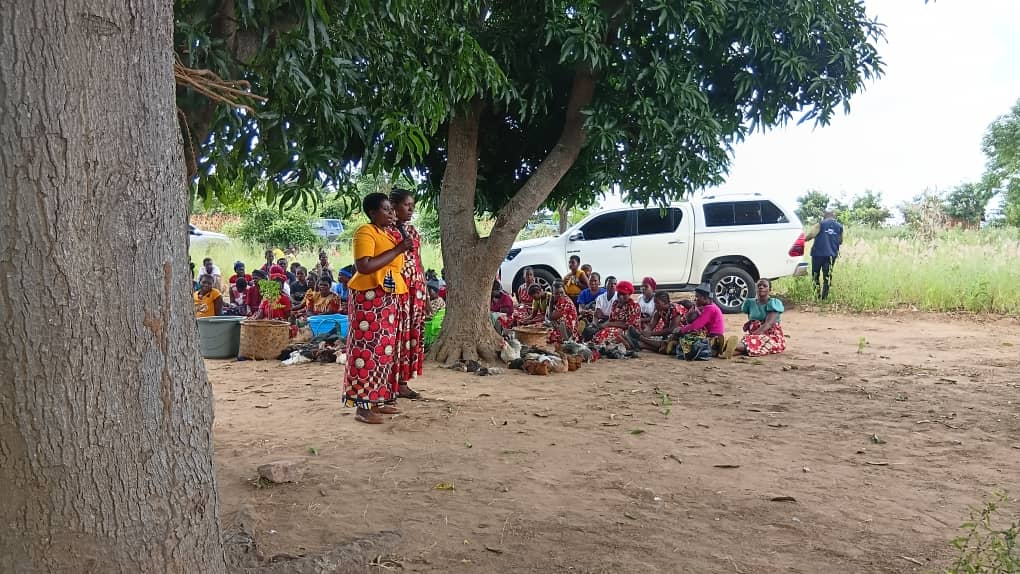
Falesi Kamowa (holding the microphone) explains how the Pass-on Model has helped the community to build resilience and mitigate the impacts of climate change
“The recovery cost is estimated at US$1.7 billion, mostly to support affected families with relief assistance and rebuild the agricultural sector—the backbone of Malawi’s economy,” DoDMA told Dialogue Earth.
Yet, five years later, despite the recurring climate shocks, farmers in Makoloje have reasons to be optimistic. Benefits introduced under the Sustainable Agricultural Production Programme continue to improve livelihoods, while the Sustainable Agricultural Production Programme II (SAPP II) is safeguarding and expanding those gains.
SAPP aimed at enhancing agricultural productivity and improving rural food security through simple and affordable technologies to help smallholder farmers bridge a wide gap of between actual and possible food-crop yields in Malawi.
Building on this foundation, SAPP II is supporting farmers to diversify and expand their agricultural enterprises- enabling rural households to generate wealth, put more nutritious food on the table, and create a stronger foundation for their future.
Kamowa says since 2021, members of Mgwirizano Club have generated a total income of MK26,235,000 from chicken farming activities supported through the programme.
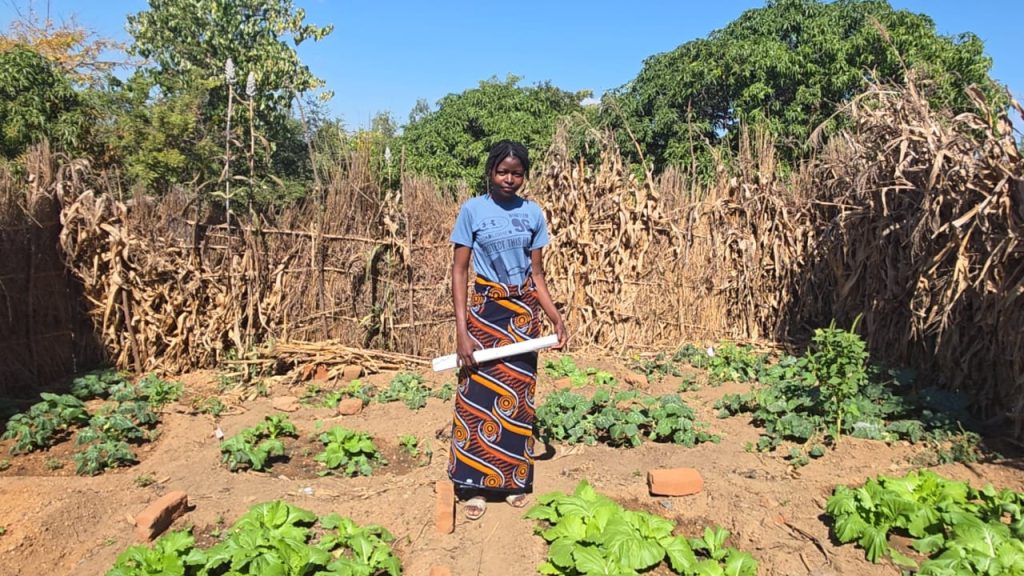
Maria Michongwe practising Integrated Homestead Farming (IHF), using manure from her chickens under the Pass-on Model. She has established a dimba garden behind her house to improve household food production
“The 15 members who started the group have now passed on chickens to 120 other beneficiaries. We are currently in the eighth cycle of the programme, and this year alone we have already passed on 300 chickens to new beneficiaries,” she said.
A walk through villages a few kilometres from Makoloje reveals the ripple effects of the livestock pass-on initiative. Bicycles now glide along dusty roads in Jana Village, helping families overcome transportation challenges, while solar lamps illuminate homes that once relied on dim and expensive lighting sources.
At Jana Village, Raphael Maxwell a member of Chisangalaro Goat Club says the group has generated MK5,430,000 through goat sales, while the number of beneficiaries continues to grow.
“Because of SAPP, more farmers have ventured into livestock farming. Income from goat sales is helping families pay school fees for their children, buy solar lamps, and invest in bicycles that make everyday life easier,” says Maxwell.
Wazayo Phiri, District Animal Health and Livestock Development Officer (DAHLDO), says the gains recorded under SAPP and SAPP II stem from deliberate investments in both technical capacity and community ownership.
He says the programmes strengthen the capacity of Animal Veterinary Assistants (AVOs), enabling them to provide timely and effective animal health services, while also establishing community-based structures that oversee livestock interventions at the local level.
“SAPP and SAPP II achieve these results because they invest in strengthening the capacity of our AVOs and establish local structures that instill a sense of ownership among community members.
“The project equipped our AVOs with the knowledge and skills to prevent and manage livestock diseases. It also facilitated the formation of local structures, such as Livestock Steering Committees, which oversee the entire process at community level and ensure that beneficiaries adhere to programme guidelines,” Phiri says.
SAPP’s Pass on Model providing “double dividend”
Director of Agriculture in Balaka District, David Alli says the success of the SAPP pass-on model lies in its ability to help communities withstand the growing impacts of climate change.
Balaka district frequently battered by prolonged dry spells, erratic rainfall and other climate-related shocks. Livestock has emerged as a reliable safety net for vulnerable households.
“Livestock production is an all-season enterprise,” explains Alli. “When crops fail because of droughts or other natural disasters, goats and chickens continue to provide income and food for families.”
Years after the first goats and chickens were distributed, the initiative continues to influence. Farmers have stopped relying on chemical fertilizer but making their own Mbeya (Organic Fertilizer) to boost soil fertility.
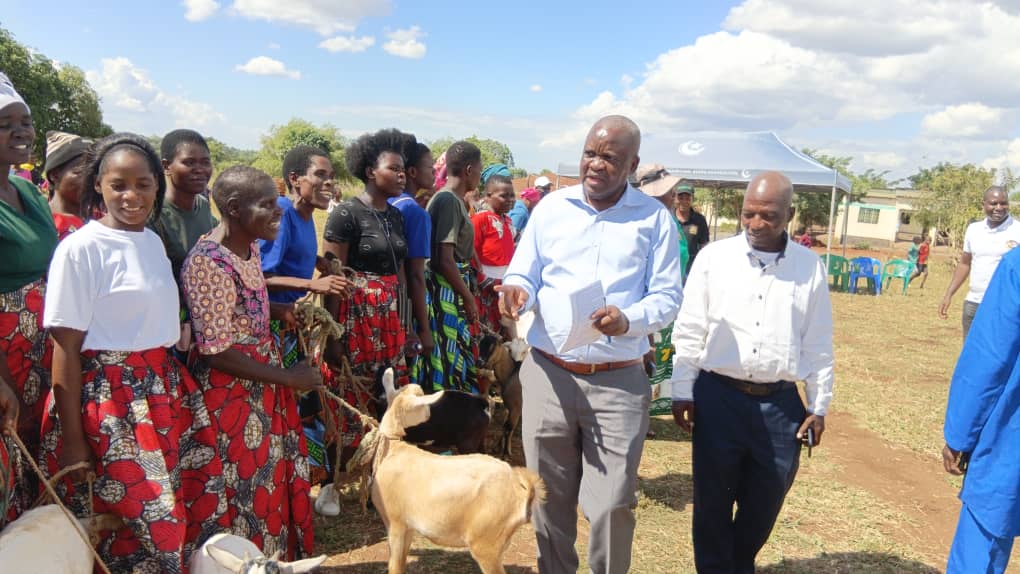
Alli (in sky blue shirt) says livestock production is an all-season enterprise
Kamowa says the animals are also providing a steady source of manure, helping restore soil fertility at a time when the cost of chemical fertilizers remains beyond the reach of many rural households.
“The manure we get from the goats is helping us make organic fertilizer for our fields,” says Kamowa. “It improves our crops and reduces our dependence on chemical fertilizers, which are very expensive”.
SAPP II Bringing in Farmer Challenge Fund
Building on gains of different innovations and technologies of SAPP including livestock pass-on initiative, SAPP II is using the Farmer Challenge Fund to improve farming from survival into profitable business.
Balaka District Agribusiness Officer Dyson Chingeni says the fund is designed to unlock the commercial potential of farmers by supporting innovative agriculture enterprise and strengthen links to markets.
“The farmer challenge fund is building on the gains of SAPP. Farmers have improved productivity and the next steps is helping them engage in agriculture as a business and participate in agricultural value chains,” says Chingeni.
With SAPP II, farmers in communities such as Makoloje and Jana see an opportunity to take their ambitions even further. Through the Farmer Challenge Fund, more cooperatives are expected to emerge, enabling farmers to aggregate their produce, expand production and add value to their products before reaching the market.