A jubilee church, a synodal church
About a week or two ago, the Malawi Conference of Catholic Bishop released a circular announcing the official beginning for the preparations for celebrating the upcoming jubilee of the 125 years of existence of the Catholic Church in Malawi. This was only an official announcement of otherwise a celebration whose anticipation and preparations begun sometimes back.
As already shared in previous articles, such a celebration is a moment of thanksgiving to God who making the church of Malawi grow to unimaginable levels and also admire and celebrate the bravery of the first missionaries who endured a lot of persecution and other challenges to plant the seed of the faith on Malawian soil. This moment, most importantly, is one of self-introspection to see what the church, in the course of such adorable growth, has not done well.
This is with the view to become and growing into a better church that is in line with the ideals of Christ its head and Christianity as a religion. At this juncture, it is worth asking ourselves this question: what must the church of Malawi now become in order to be closer to Christ while at the same time closer to the poor and the disadvantaged of the society in its mission?
This is a question of a church which is self-aware and realizing that growth is a process and as long as the church has human beings leading it, there will always be things to learn. This question calls on being honest with oneself as well as being humble to learn. This article seeks to explore on what paths the church of Malawi must tread in order to grow into a family after Christ heart.
Firstly, a church that is willing to ask itself ‘what it must become’ is one that is willing to learn in order to grow. Recently, the church has been talking about synodality. I submit that the church in Malawi must embrace synodality and beginning the journey towards being a synodal church. What does a being a synodal church entail? Synodality is best summarized by the three words: listening, participation and mission.
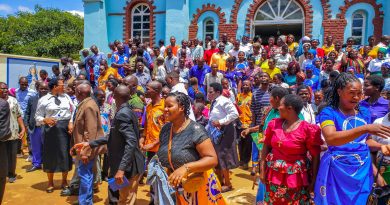
The church on earth being a pilgrim church must embrace listening spirit because it must be aware that on this pilgrimage, there are a lot of people involved. In other words, everyone deserves to be listened to and be counted as part of the church. The joys and hopes of every member pilgrim should be the joys and hopes of the whole pilgrim church.

Basilica of Our Lady of Peace in Yamoussoukro, Ivory Coast (Photo Credit: Internet)
In a world that listens to respond, the church of Malawi is challenged to learn to listening in order to understand. Such listening is not one that is directed to few privileged individuals but everyone. The spirit of synodality challenges the church in Malawi and the church at large that the lay faithful are not just there to listen to the clergy without being listened to, and that the clergy are not just there to be listened to by the faithful without they themselves taking the pains to listen to the lay faithful.
It is often said that a leader who does not listen, sooner or later, will be surrounded by people who have nothing to say. Similarly, a church that is not willing to truly listen to its members will eventually be filled with members that don’t feel part of the church. As the Malawi church celebrates 125 years, it is challenged to open avenues for listening to its members.
Such listening should also not simply be directed to members within the church but also those of other religious denominations and religions. This is why ecumenism and interreligious dialogue is an important aspect of the church. We should ask ourselves, as the church of Malawi at large, what initiatives are we taking to enter into dialogue with members of other religious faiths most of whom are related to us in so many ways, whether as blood relatives, business partners or co-workers?
As a church, are we shaping our faithful into people who can co-exist and dialogue respectfully with people of other religions? The church should be in the forefront promoting peaceful co-existence in the society. Additionally, listening should be directed towards the society in all its complexities in order to read the signs of the times. This will make the church of Malawi to be ever relevant to the present condition of the society.
Today, the world all over is facing the Artificial Intelligence revolution. How has this revolution affected the world at large and Malawi in particular? How has AI affected the Catholic faith? With AI taking over almost every sector of the society and changing people’s notions over some religious beliefs, what must the church of Malawi do about it? A church that ignores such societal phenomena risks not only losing touch with reality but also become irrelevant to its members.
The second key aspect of a synodal church is participation. This simply means that every member of the church, lay and cleric, has a role to play in preaching the Gospel. This mandate emanates from the Baptism that every Christian receives. The Church in Malawi, with its growing population, faces lack of adequate priests to attend to the flock. While we may be proud that our major seminaries are still filled with candidates for priesthood unlike other continents, we must be careful that the vocation crisis does not catch us unawares when it finally dawns on us. A synodal church is one that recognizes that every member of the church has a God-given charism which they have to be given chance to use to advance the spreading of the Gospel.
The third aspect of synodality is mission. This means that the church exists to fulfil the mission of Christ, which is the preaching of the Gospel. A synodal church is one that is always aware of its mission. As the church in Malawi celebrates 125 years of existence, it proper that it should reflect on how faith it has been to its mission of preaching the Gospel and what more can it do to keep such mission alive.
In a fast-changing world such as ours, the church can easily be entangled in a lot of things that can make it forget its mission. Despite the many temptations and persecutions facing it, the church should always try to be faithful to her calling and mission. The church cannot under any circumstances give up on its mission. This has been evident throughout history that despite being persecuted, facing many trials even martyrdom, the church has stood strong not because of its own accord but because Christ guides it.
*Fr Nihorowa is a regular contributor to The Lamp magazine.