Analyzing Malawi’s energy sector
By Kandi Padambo*
The energy sector of a country can be taken as comprising all companies and institutions concerned with procurement, production and distribution of energy items and ancillaries including regulation of main activities in the supply chain. But what is energy? Its sources may provide a clue.
Renewable energy
Renewable energy, regarded as cleaner, safer and more cost effective in the long run, is derived from natural sources or processes that are self-replenishing. The sun, wind and flowing and undulating water in our rivers and oceans are examples.
Non renewable energy
Sources of non-renewable energy such as fossil fuels, coal, and uranium, are exhaustible.
Energy, Power And Electricity
The terms energy, power and electricity are often used interchangeably. However, in industry lexicon, the power sector, refers to the electricity component.
The power sector
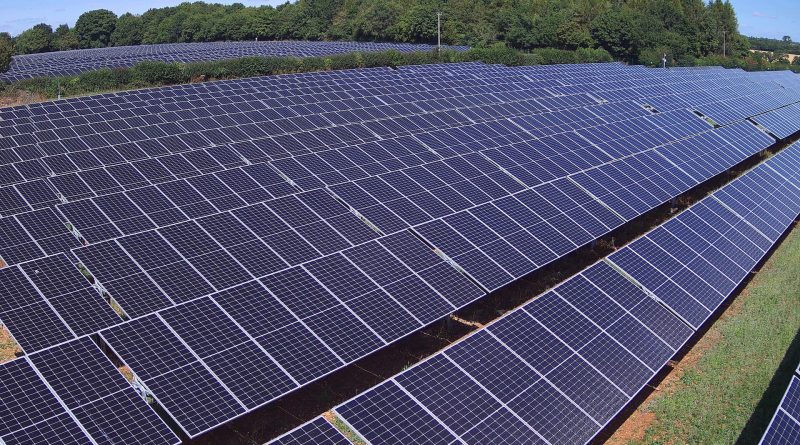
Our total installed capacity for electricity production was, by 2024, 554.3 MW, of which 72% was hydropower, 18.4% solar and 9.6% thermal.
Investment in the power sector
Expansion of power production and delivery requires enormous investment which, in the power sector, has been led by the state in almost all countries regardless of ideological inclinations. Electricite de France (EDF), one of the world’s ten biggest power companies and Grid Corporation of the People’s Republic of China (SGCC), the world’s largest utility supplying electricity to over 1.1 billion people are all state owned. More examples abound.
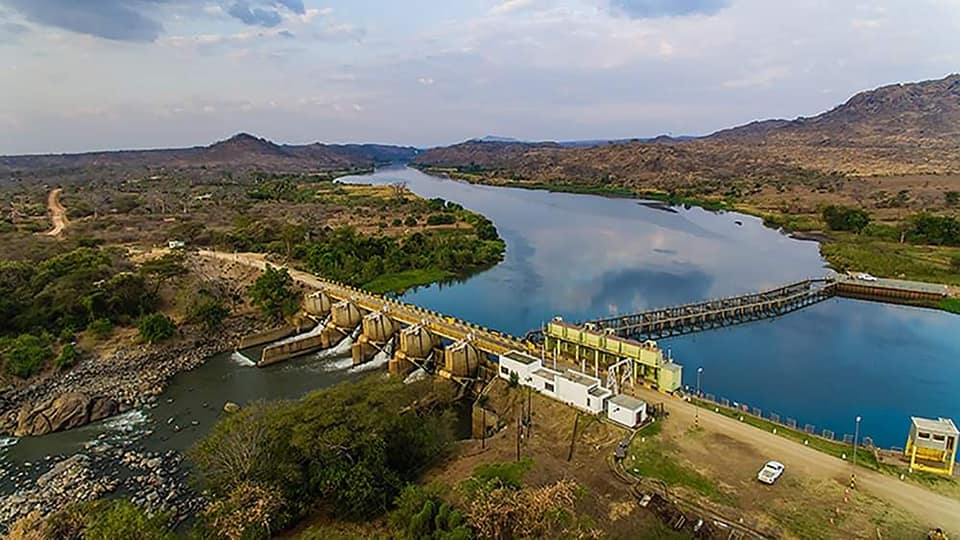
Malawi relies on its hydro stations for electricity (Photo Credit: Internet)
The case of Malawi
The 2021 Political Economy Analysis On The Management of Water and Energy Sectors And The Role Of Political Parties includes a histogram of new investment in power generation capacity juxtaposed against a background of demand for electricity over the same period beginning from 1955. Demand is shown to be below generation capacity with a sizeable capacity surplus till 1996, after introduction of multiparty politics, when a dramatic outstripping of supply by demand occurred.
It is easy to conclude that with multi-party politics came myopic planning focusing on short payback period projects to attract votes at the expense of sober long-term planning for the sector that would benefit the economy. But is that a valid conclusion?
Hydro-power plants have long lead times. Nkula A and B commenced during the colonial administration and had the last of the three 8 MW three machines at Nkula A commissioned by the country’s first republican President in 1966. Construction of the Wovwe mini-hydro power station commissioned by the Republic’s second President in 1995 commenced during the one party era.
The President also commissioned the first phase of the Kapichira hydro-plant in 2000 designed for four 32 MW turbines. The first phase included infrastructure and installation of the first two turbines. The third President of the Republic commissioned the last two turbines for the Kapichira project in 2013.
The KWF Kapichira hydro-plant post completion evaluation report concluded that “… in the long run sustainability can only be assured by a sector that is oriented towards commercial principles. The main keys to sustainability are the implementation of the reform programme along with financial and organizational autonomy for the sector… No new Fund Cooperation commitments should be undertaken in Malawi’s power sector until reform steps are initiated…”
Perhaps it is high time we should start paying attention to ensuring that our SOEs in the power sector are granted enough management and operational autonomy to be perceived as running on commercial principles. Mobilisation of local resources should not entirely be ignored.
Is there any plausible reason why Electricity Generation Company (EGENCO) or Electricity Supply Corporation of Malawi (ESCOM), both limited liability companies, cannot assert financial autonomy through raising funds through the Malawi Stock Exchange?
ESKOM of the Republic of South-Africa, the Kenya Electricity Company and the Power and Lighting Company, the Tanzania Electricity Company (TANESCO), all state owned, use their national stock exchanges to redeem debt and fund expansion.
Reforming the power sector
The Sector in Malawi has, since the late 1990s,undergone reforms. At the commencement of the reforms ESCOM’s total installed capacity was 242 Megawatts (MW) of which 221 MW was hydro and 21 MW thermal.
At the end of 2024, EGENCO had an installed capacity of 441 MW of which the available capacity was 344 MW. A 358 MW plant at Mpatamanga is being developed through a special purpose vehicle, Mpatamanga Hydro Power Limited (MPHL), in which the Government, through EGENCO has a 30% stake with the remaining 70% shared among IFC of the World Bank group, France’s state owned EDF, British International Investment, NORFUND of the Norwegian Government and SCATEC, a Norwegian privately owned power company specialising in renewable energy systems.
The project is on a ‘Build Own and Operate’ basis and will be fully transferred to the Malawi Government after 30 years. The expected completion date is 2030.
There are many ways in which the power sector can be structured. But an important factor to be taken into account is the size of the sector. South-Africa, Zimbabwe, Moza-mbique, Zambia and Tanzania, to confine comparison within the SADC region, have liberalised power markets with installed capacities well in excess of 2,000 MW. All of them have vertically integrated state owned utilities along with a significant number of Independent Power Producers, some also vertically integrated.
Unbundling small electricity utilities may not yield overall tangible benefits but simply overburden stakeholders with avoidable expenses. State-owned companies can be unbundled when liberalising the power market. They can also be left intact. We opted for the former. Successful power market reforms should result in improved service delivery at equitable pricing on a level playing field overseen by a professionally run non-partisan regulatory authority.
Electricity economics demand that the costs of supply to customers should be reflected in the tariffs applied to them. Additional peak power is expensive and the customers responsible for such peaks should bear concomitant costs. Tariffs should also reflect future cost as response by consumers to tariffs take time and invariably involve capital investment. But how have we fared after implementing the reforms?
Petroleum products
Our economy also needs petroleum products on its energy menu. Petrol, diesel and liquefied petroleum gasses(LPG) are demanded by the Malawi energy market. Almost all are imported. The final price includes a significant proportion for transportation costs.
Analytical reports have indicated that rail transport can reduce transportation costs by up to 50% while the time taken for fuel to arrive in Malawi, considering the Nacala port, can be reduced significantly by up to 10 hours. Rail allows for bulk transportation of millions of litres of refined petroleum in one trip. Road transportation, while essential for final delivery to pump stations within our borders, rail transportation for cross border importation of our petroleum products is more advisable.
A significant reduction in the price of petroleum products can have a positive ripple effect throughout the economy. Wear and tear of our roads can be reduced.
Local refining
Generally importation of crude petroleum and locally refining it should result in significantly lower prices and create employment opportunities. The construction costs of a small, modular crude oil refining plant, with a typical output of 1,000 to 9,000 barrels a day, may range from US $10 Million to $50 million.
Approximately 168 litres of crude oil can be refined to I80 litres of refined petroleum products, 45% to 47% of which can be petrol while 25% to 27% can be diesel. It has been estimated that Malawi imports about 8,000 barrels of refined petroleum a day.
Projects like an oil refinery may indeed not be viable if undertaken alone but joint ventures with neighbouring countries may be worth considering.
Neighbouring Mozambique is developing a 240,000 barrel per day petroleum refinery in partnership with a Nigerian firm, Aiteo, and the state-owned Petromoc. The refinery is expected to commence operations next year.
Mozambique and Zambia agreed to build a petroleum pipeline stretching over a distance of over 1,500 kilometres from the port city of Beira to Ndola in the heart of Zambia’s copperbelt. This will supplement pipelines that meander into our neighbouring republic from other directions.
The distance between the port of Beira in Mozambique and Blantyre is less than 500 kilometres. That from Mozambique’s Nacala port to Lilongwe is less than 1,500 Kilometres.
Could Zambia be reaping from the legacy of having been a Frontline State during the difficult times when almost all our neighbouring countries forged closer ties by joining hands to throw their weights behind the liberation movements fighting to free their societies from the yoke of minority racist regimes?
Storage
While the current 90 day cover of combined strategic reserves seems adequate, considering our total demand for petrol, diesel and other refined products from refined petroleum, there still may be need for expansion of these facilities.
Apart from logistical issues at our ports and on our reads, recent developments have demonstrated that importation of refined petroleum is prone to being negatively impacted by developments far beyond the distant horizons of our peaceful borders.
*Padambo is former chief executive officer of ESCOM.