Language, identity and the future of Malawian culture
By Victor Ogotomelli Ntaukira*
In contemporary Malawi, a quiet but weighty transformation is taking place. It is a transformation that is often disguised in humour but carries serious cultural implications. Imagine a child confidently greeting their siblings and parents in English but gets confused before their grandparents in the village just because the two cannot speak the same language. This scenario reflects a growing disconnect between generations. While the child appears polished and modern, something deeper is being lost and that is the ability to connect with their own cultural roots.
Language is more than a tool of communication. It is a vessel of identity, history and belonging. In many Malawian homes, especially those in the urban areas, English dominates daily life. English is spoken at home. It is reinforced at school, echoed in church and amplified through television. While this shift may be driven by the desire to equip children with global competencies, it inadvertently sidelines indigenous languages such as isiNgoni, chiChewa, chiTumbuka, chiYao and others. As a result, children are growing up associating English with intelligence and success, while viewing their mother tongues as secondary and irrelevant.
This linguistic imbalance creates a cultural gap which is most visibly revealed during visits to the village. Grandparents, who are custodians of tradition and oral history, often communicate in local languages. Culture does not exist in isolation but lives, breathes and passed on through language. In Malawi, just like in many societies, local languages are not merely tools of communication, but are the very carriers of cultural identity.
To say that culture is transmitted in local languages is to recognise that without these languages, culture itself becomes fragile, diluted and consequently lost. When a child understands and speaks the local language, they do not just hear a story, they inherit a worldview. Thus, when grandchildren cannot understand their grandparents, it is not merely a language barrier but a breakdown in the transmission of culture.
When children cannot understand and speak their local languages, stories, values, riddles, songs and wisdom that were once passed down through generations risk being lost together with the moral and cultural teachings which they carry. The emotional moment when a grandparent warmly calls out to a grandchild in a local language, only to be met with confusion, symbolises a deeper cultural disconnection.
Local languages also preserve a society’s unique way of interpreting the world. Proverbs, for instance, are condensed forms of wisdom shaped by generations of experience. Their meanings are often tied to cultural contexts that cannot be fully captured in translation. When children grow up without understanding these linguistic nuances, they miss out on the deeper layers of cultural knowledge and reasoning that guide behaviour and decision-making.
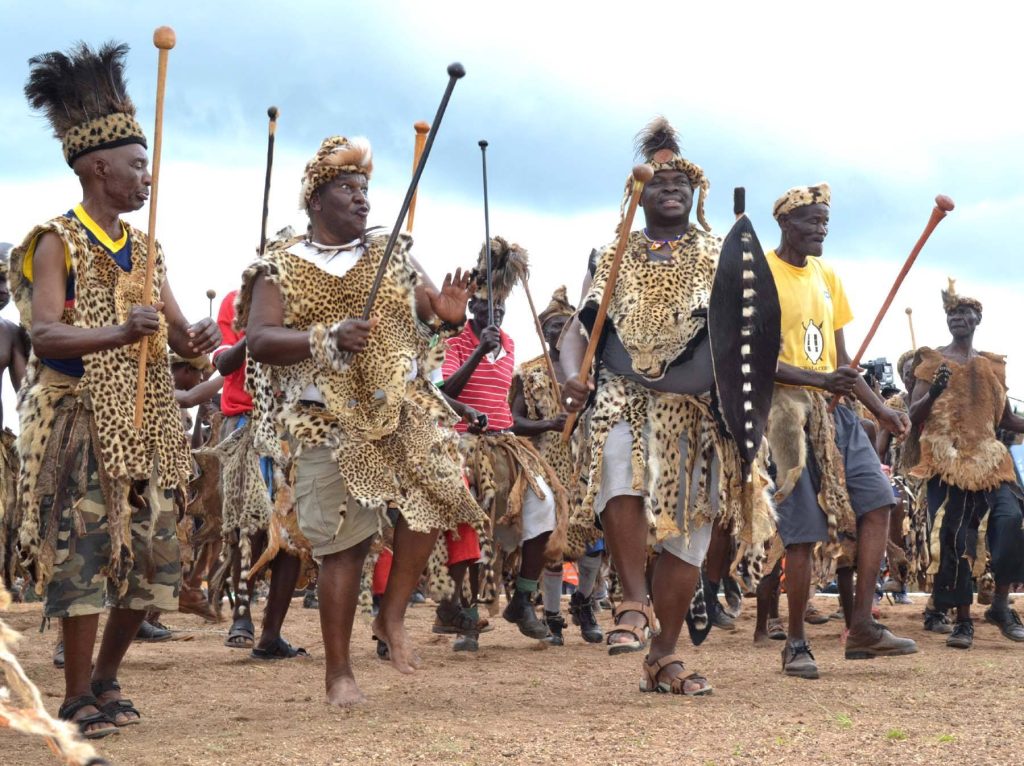
Ingoma dancers at a cultural event (Photo Credit: Facebook)
Furthermore, the consequences extend beyond family interactions. A generation that is detached from its linguistic and cultural heritage may struggle to authentically represent Malawi on global platforms. Consider a future professional attending a tourism conference or cultural exhibition. When asked to articulate Malawian culture, will they speak from lived experience or they will rely on second-hand knowledge?
Culture cannot be convincingly presented if it has not been genuinely experienced. Culture is not learned in boardrooms or through internet searches, it is lived daily in language, dress, music and community practices. Cultural practises such as traditional ceremonies, music and dances are inseparable from language. Songs that are sung during initiation ceremonies, weddings or any other communal gathering are composed in local languages and they carry meanings that go beyond melody. They tell stories, honour ancestors and reinforce identity. A child who does not understand the language may participate physically in these practices but remains disconnected from the cultural significance of the act.
The devaluation of local languages also fosters a dangerous perception that being ‘modern’ requires abandoning one’s roots. Children who are discouraged from speaking their mother tongue internalise the idea that their culture is inferior. This does not only weaken cultural pride, slowly eroding national identity but also weaken the continuity of cultural identity. A nation’s strength lies in its ability to preserve its uniqueness while engaging with global communities. Losing touch with indigenous languages risks creating a society that is outwardly sophisticated but inwardly disconnected.
However, the trajectory is not irreversible. The responsibility to preserve culture begins at home. Parents and guardians must recognise that raising globally competent children does not require sacrificing cultural identity. Instead, a balanced approach is needed. There is need to value bilingual or even multilingual upbringing.
Children should be encouraged to speak their mother tongue with the same pride as they speak English. Simple practices, such as storytelling in local languages, teaching them traditional songs and encouraging conversations with elders, can make a significant difference. By encouraging children to speak local languages at home and in the community setting, families ensure that culture remains a living and evolving reality rather than a fading memory.
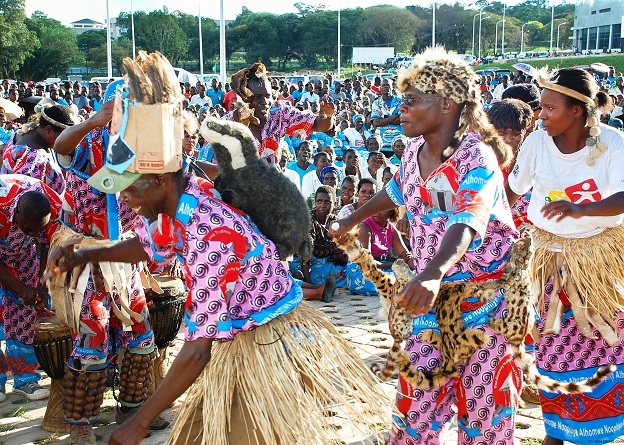
In addition to that, cultural expressions through clothing, music, dance and art should be normalised rather than treated as occasional or ceremonial. When children wear traditional attire or participate in cultural activities, they are not being outdated. They are embodying Malawi’s heritage. These experiences shape their sense of identity and prepare them to become ambassadors of their own nation. It does not make much sense expressing culture only once in a year through such gatherings like Mhlangano and Umthetho.
Education systems and institutions also have a role to play. While English remains the medium of instruction, local languages and cultural studies should be given a meaningful space within the curriculum. This will reinforce, in our children, the idea that cultural knowledge is not inferior, but rather complementary to formal education.
After all, it is widely supported by education researchers that children generally learn better when they are taught in their indigenous languages or mother-tongues, especially in the early years. This is because, when children learn in their familiar language, they do not have to translate before they understand. Their brains can focus directly on concepts. A child who is taught in a foreign language wrestles with comprehending the vocabulary first then with the concepts.
Ultimately, the preservation of Malawian culture depends on deliberate action. If children grow up disconnected from their roots, the nation risks not only its languages but also its stories, values and identity. Tourism, cultural promotion and national pride all rely on a population that understands and appreciates its heritage. The humorous, yet poignant scenario of a child unable to communicate with their grandparent highlights a serious cultural challenge.
Malawi must strive to raise a generation that is both globally competent and deeply rooted in its identity. Children should be able to greet their grandparents with confidence in their mother tongue, while also engaging the world with pride. Culture does not begin at the airport, it begins at home, in the language we speak, the stories we share and the identity we choose to preserve.
*Ntaukira teaches at Dombole Secondary School in Ntcheu but writes in his personal capacity.