Malawi’s cost of living crisis: Surviving on the edge
By Lizzie Elizabeth Chuma*
Fuel is more than just what powers cars it quietly drives the entire economy. In Malawi today, every increase in fuel prices sends shockwaves through the cost of living, affecting everything from transport fares to the price of a loaf of bread. For many households, these changes are not just numbers on paper but daily struggles to afford basic needs. As prices continue to fluctuate, Malawians are left asking: why does every fuel adjustment hit so hard, and who really bears the cost?
How fuel prices ripple through the economy
At the heart of the issue is a simple but powerful reality: fuel is the backbone of economic activity. When fuel prices rise, transportation costs increase immediately. Minibus operators adjust fares, sometimes overnight. For a vendor travelling to the market or a student commuting to school, even a small increase in transport fares can mean the difference between making a trip or staying home. This ripple effect does not stop there. Goods transported across districts from maize to cooking oil become more expensive because suppliers must cover higher fuel costs.
Households under pressure
The result is something many Malawians are now all too familiar with: a steady and often unpredictable rise in the cost of basic commodities. A bag of maize that was affordable a few months ago suddenly becomes out of reach. The price of bread, sugar, and even tomatoes seems to shift constantly. For families already living on tight budgets, this creates a cycle of financial strain. Meals are reduced, diets become less balanced, and priorities shift from long-term goals to immediate survival.
Businesses forced to choose
But beyond households, businesses are also feeling the pressure. Small-scale traders and shop owners are forced to make difficult decisions. Do they absorb the increased costs and risk making losses, or do they pass them on to customers? In most cases, the burden is passed on, contributing further to inflation. Some businesses even take advantage of the situation, increasing prices beyond what is justified, knowing that consumers have little choice but to pay.
This raises an important concern about regulation and fairness in pricing. While fuel price adjustments may be influenced by global oil markets, the way those changes translate into local prices is not always transparent. Many consumers feel disconnected from the decision-making process, unsure of how prices are determined and whether the increases are justified. This lack of clarity often leads to frustration and mistrust.
In cities like Blantyre and Lilongwe, the effects are immediate. Minibus fares often increase within days of a fuel price adjustment. A route that used to cost MK500 can quickly rise to MK700 or more, forcing commuters to rethink their daily movements. For a vendor travelling from Balaka to urban markets, transport costs now consume a larger portion of profits, leaving less income to sustain their families.
This pattern reflects a broader economic reality: when fuel prices rise, transportation costs increase, and these costs are passed down to consumers through higher prices of goods. Traders bringing tomatoes from rural farms into town factor in fuel costs, and this is why even basic items like vegetables have become noticeably more expensive in local markets, according to the National Statistical Office.
A visit to markets such as Limbe Market in Blantyre tells the story clearly. A heap of tomatoes that once sold at an affordable price is now significantly higher, and maize prices continue to fluctuate. The National Statistical Office reports that inflation in Malawi has been driven largely by rising transport and food costs. For ordinary citizens, this translates into fewer meals, reduced portions, and difficult financial decisions.
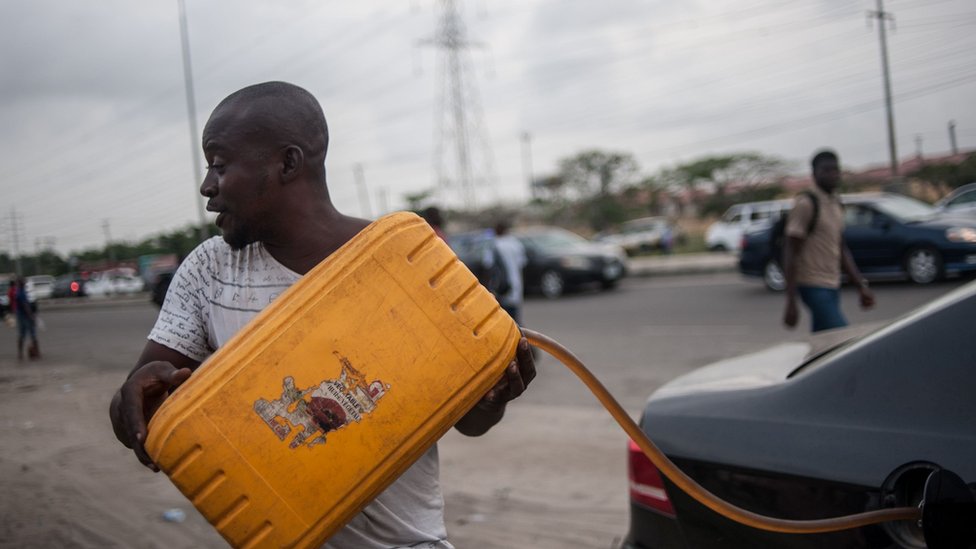
The black market for fuel is becoming so profitable (Photo Credit: AFP)
Small businesses are also under pressure. In trading centres across Balaka and Zomba, shop owners explain how they are forced to adjust prices frequently. A grocery shop owner may increase the price of sugar or cooking oil not just once, but multiple times in a month. While some adjustments are necessary, others are influenced by uncertainty and fear of future losses.
Malawi’s dependence on imported fuel further complicates the situation. The country relies on external suppliers, making it vulnerable to global oil price changes and foreign exchange shortages. The Reserve Bank of Malawi has repeatedly highlighted how exchange rate pressures contribute to rising import costs. These external factors eventually reach the everyday consumer, even though they originate far beyond Malawi’s borders.
Beyond fuel imports, Malawi’s cost of living crisis is compounded by the structure of its domestic market systems, particularly the absence of effective consumer protection and price stabilization mechanisms. While the Malawi Energy Regulatory Authority, MERA, announces official fuel prices, there is limited real-time monitoring of how those adjustments cascade through informal transport and retail sectors.
Minibus associations often set fares through local consensus rather than regulated formulas, meaning a MK50 per litre fuel increase can trigger disproportionate fare hikes that vary by route and operator. Similarly, agricultural markets lack buffer systems to absorb transport shocks.
Why the market system makes it worse
Smallholder farmers, who make up over 80% of producers, sell perishables like tomatoes and vegetables through intermediaries with no cold storage or collective bargaining power. When fuel rises, traders protect their margins by raising consumer prices immediately, but farm-gate prices paid to producers remain stagnant or fall due to reduced demand. This asymmetry means both ends of the value chain the rural farmer and the urban consumer absorb the shock, while mid-level transporters and vendors transfer risk downwards.
Without deliberate policy interventions such as targeted transport subsidies for essential goods, regulated fare-setting frameworks, or investment in agro-processing to reduce reliance on long-haul transport of raw produce, fuel adjustments will continue to trigger disproportionate inflation. The Reserve Bank of Malawi acknowledged in its 2024 Monetary Policy Statement that supply-side factors, not just monetary policy, drive Malawi’s inflation, yet fiscal measures to cushion households remain ad hoc. Therefore, addressing the crisis requires recognizing it as a structural market failure, not merely a consequence of global oil prices.
University students: Surviving on the edge
One group that is quietly bearing the weight of these rising costs is university students. In institutions such as the University of Malawi and Mzuzu University, students are struggling to keep up with the rising cost of living. Transport alone has become a burden. Students commuting from off-campus residences now spend significantly more just to attend classes. At the same time, the cost of food has increased sharply.
A simple meal that cost MK1,500 when I first started at Catholic University of Malawi in 2023 now costs MK6,600 or more. For students who rely on fixed allowances from parents or guardians, this creates an unsustainable situation. Some students have adapted by skipping meals, sharing food, or turning to small-scale businesses such as selling snacks or second-hand clothes. Others walk long distances to campus to avoid transport costs. While these strategies show resilience, they also highlight the seriousness of the situation.
Personal Reflection
As a student at Catholic University of Malawi, I have experienced this reality firsthand. It is becoming harder and harder to survive. The cost of food has gone up, basic commodities are no longer affordable, and even managing daily transport is a challenge. What used to be enough for a week now barely lasts a few days. Like many other students, I constantly have to adjust cutting down expenses, skipping certain meals, and finding ways to stretch limited resources. This is no longer just an economic issue; it is a lived experience affecting our education and well-being.
Solutions
In response, many Malawians are adopting coping strategies walking instead of taking transport, reducing consumption, and engaging in side businesses. However, these are short-term solutions to a long-term problem. Without structural interventions such as price monitoring, economic diversification, and investment in alternative energy, the cycle is likely to continue. Ultimately, the cost-of-living crisis is not just about numbers it is about people. It is about survival, dignity, and the ability to live a decent life in an increasingly expensive environment.
The burden is not falling evenly across Malawi. While urban households face immediate fare and food shocks, rural communities are experiencing a slower but equally damaging squeeze. Farmers in Dedza and Ntcheu report that higher transport costs mean traders offer lower prices at the farm gate because “fuel is expensive,” yet those same traders charge urban consumers more.
This double pressure erodes rural incomes while still inflating city prices. Women are disproportionately affected, as they manage most household food budgets and bear the brunt of meal reductions. Health workers in Balaka have noted increased cases of students and children presenting with fatigue and poor concentration symptoms linked to skipped meals and reduced dietary diversity. Addressing this crisis therefore demands action on three fronts.
First, transparency: MERA should publish not only fuel price changes but also a simplified breakdown of what drives each adjustment, and work with district councils to issue fare guidelines within 48 hours of any fuel review. Second, protection: Government and universities must urgently review student allowances and loan disbursements against current food and transport costs, because the MK1,500 meal of 2023 cannot be sustained on a 2023 budget in 2026.
Third, alternatives: Investment in rail and water transport for bulk goods, and community-level solar milling and processing, would cut reliance on diesel for moving maize and vegetables. These are not quick fixes, but without them, coping strategies like walking to campus or eating once a day will become permanent features of Malawian life, not temporary adjustments.
*Chuma is a freelance contributor to The Lamp magazine.