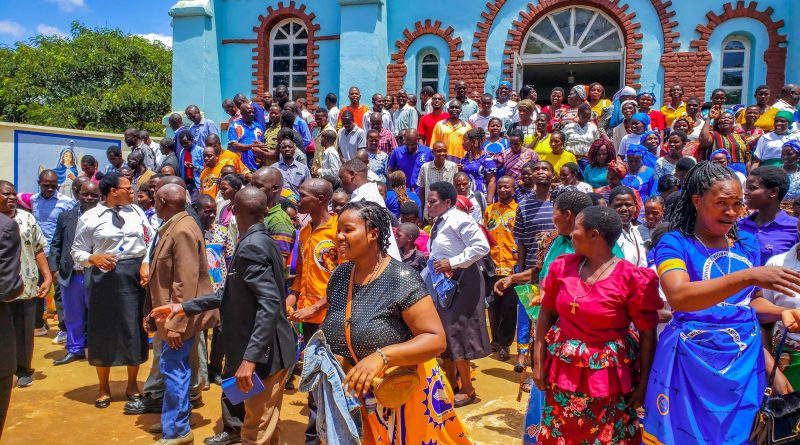
Celebrating 125 years of faith, service and hope
By Precious Nihorowa* CSSp
The jubilee of the Catholic Church in Malawi is finally here. We thank God for bringing us this far. As the Catholic Church in Malawi celebrates 125 years of her presence and mission, we are invited to look beyond statistics, buildings, and institutions and reflect on a more profound reality: the Church has been a faithful companion of the Malawian people throughout their journey.
For one hundred and twenty-five years, the Church has walked with the people of Malawi through moments of joy and sorrow, prosperity and hardship, peace and uncertainty. She has shared in the hopes of the nation, listened to the cries of the poor, educated generations of young people, cared for the sick, defended human dignity, and proclaimed the Good News of Jesus Christ. This anniversary is not merely a celebration of the Church’s history. It is a celebration of a relationship — a partnership between faith and life, between the Gospel and the aspirations of the Malawian people.
Walking together from the beginning
When the first Catholic missionaries arrived in what is now Malawi, they encountered a people rich in culture, traditions, and communal values. Their mission was not simply to establish churches but to accompany people in their search for meaning, hope, and a deeper relationship with God. The missionaries quickly discovered that evangelization could not be separated from human development.
To preach Christ effectively meant caring for the whole person — body, mind, and spirit. They learned local languages, travelled through difficult terrain, and lived among the people they served. They shared their struggles and celebrated their achievements. In doing so, they established a model of accompaniment that continues to define the Church’s mission today.
Yet the Church’s growth was not the work of missionaries alone. Local catechists, community leaders, and ordinary believers became partners in the mission. They carried the Gospel into villages and homes, often under difficult circumstances. Through their witness, Christianity became deeply rooted in Malawian soil. The story of the Catholic Church in Malawi is therefore not simply the story of foreign missionaries. It is the story of a people who embraced the Gospel and made it their own.
A companion in education
One of the most visible ways the Church has accompanied the Malawian people has been through education. For generations, Catholic schools have opened doors of opportunity for countless young Malawians. Long before education became widely accessible, mission schools were already teaching literacy, numeracy, practical skills, and Christian values. The Church understood that education is more than the transmission of knowledge. It is the formation of the whole person. Through schools, the Church has helped young people discover their God-given talents and prepare for meaningful participation in society.
Many of Malawi’s leaders, professionals, teachers, healthcare workers, and clergy received part of their education in Catholic institutions. These schools have shaped not only individual lives but also the development of the nation itself. The Church’s educational mission remains as relevant today as ever. In a rapidly changing world, Catholic schools continue to form young people who combine academic excellence with moral integrity, compassion, and a commitment to service. In every classroom, the Church continues to walk alongside the Malawian people, helping to build a future rooted in knowledge, faith, and hope.
A companion in sickness and suffering
Throughout her history, the Church has stood beside those who suffer. Inspired by the healing ministry of Christ, Catholic hospitals, clinics, health centres, and charitable institutions have become places of hope for countless Malawians. Religious sisters, priests, medical professionals, and volunteers have dedicated their lives to caring for the sick and vulnerable. They have served in cities and remote rural communities, often where healthcare resources were scarce.
During times of disease, epidemics, hunger, and natural disasters, the Church has not remained distant. She has been present among those who suffer, offering practical assistance, spiritual support, and human compassion. In every hospital ward, village clinic, and outreach programme, the Church has sought to embody Christ’s command to love one’s neighbour. For many Malawians, the Church has been more than a provider of healthcare. She has been a source of comfort during moments of fear and uncertainty, reminding people that they are never abandoned by God.
A companion of the poor and vulnerable
The Gospel places the poor at the heart of the Church’s mission. For 125 years, the Catholic Church in Malawi has sought to accompany those who struggle with poverty, hunger, unemployment, disability, and social exclusion. Through development projects, social programmes, charitable initiatives, and parish-based outreach, the Church has worked to improve the lives of vulnerable communities.
The Church’s commitment to social justice is not simply a matter of charity. It is rooted in the conviction that every human person possesses inherent dignity because each person is created in the image of God. Whether supporting orphaned children, assisting struggling families, empowering women, promoting sustainable agriculture, or advocating for marginalized communities, the Church has consistently sought to stand alongside those most in need. This commitment remains one of the defining characteristics of the Church’s presence in Malawi.
A companion in the search for justice
A true companion does not remain silent in the face of injustice. Throughout Malawi’s history, the Catholic Church has spoken courageously when human dignity has been threatened. Guided by Catholic social teaching, Church leaders have often raised their voices in defence of justice, peace, and the common good. The Church has encouraged responsible leadership, ethical governance, and respect for human rights. She has promoted dialogue during times of tension and reconciliation during moments of division.
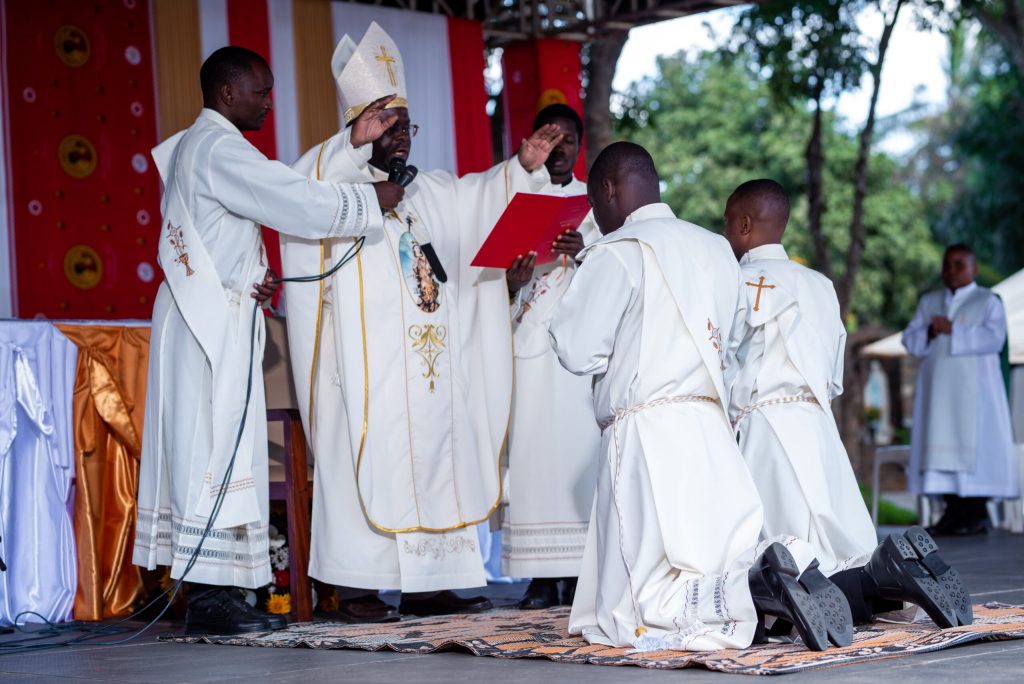
Archbishop George Desmond Tambala of the Archdiocese of Lilongwe praying for the two Deacons
In doing so, the Church has fulfilled her prophetic mission—not seeking political power, but serving as a moral voice that reminds society of its responsibilities toward the most vulnerable. The Church’s commitment to justice arises from the Gospel itself. Jesus identified himself with the poor, the oppressed, and the forgotten. To accompany people faithfully therefore requires defending their dignity and promoting conditions in which all can flourish.
A companion in faith
While the Church’s contributions to education, healthcare, and development are significant, her deepest mission remains spiritual. For 125 years, the Church has accompanied Malawians on their journey of faith. In villages and cities, in chapels and cathedrals, generations of believers have gathered to encounter Christ in prayer, Scripture, and the sacraments.
The Church has baptized children, blessed marriages, buried the dead, and celebrated the Eucharist. She has provided guidance during moments of uncertainty and offered hope during times of despair. Countless priests, religious sisters, catechists, and lay leaders have devoted their lives to nurturing the faith of God’s people. Their ministry has strengthened families, inspired vocations, and built vibrant Christian communities throughout the nation. The faith that was first proclaimed by missionaries has now become the faith of millions of Malawians who continue to live and share the Gospel in their daily lives.
Challenges of a new era
As we celebrate this jubilee, we must also recognize the challenges facing both the Church and society. Young people today face pressures unknown to previous generations. Economic difficulties continue to affect many families. Rapid technological and cultural changes present new opportunities but also new risks. Environmental concerns, migration, and social inequalities remain pressing issues.
The Church cannot simply rely on past achievements. She must continue to accompany the people of Malawi in addressing contemporary challenges. This requires renewed commitment to evangelization, stronger faith formation, greater involvement of young people, deeper collaboration among clergy, religious, and laity, and an ongoing dedication to social justice. The mission of accompaniment remains as urgent today as it was 125 years ago.
Looking toward the future
The celebration of 125 years is not the end of a journey but the beginning of a new chapter. The question before us is not only what the Church has accomplished but what kind of companion she is called to be in the future. The Church must continue to walk with families facing economic hardship. She must continue to inspire young people searching for purpose. She must continue to care for the sick, defend the dignity of the vulnerable, and promote justice and peace.
Above all, she must continue to lead people to Christ, who remains the source of all hope. The future of the Church in Malawi will not be built solely by bishops, priests, and religious. It will be shaped by every baptized believer who lives the Gospel in daily life. The next generation of Catholics is called to become active participants in the Church’s mission, bringing Christ’s love into every corner of society.
*Fr Nihorowa is a regular contributor to The Lamp magazine.