
Beyond Free education: The hidden impact of Malawi’s ban on school charges
By Bernard Thungwa
The government directive banning schools from collecting any form of money from learners has been widely welcomed as a step toward protecting parents from financial burdens. However, the policy is now revealing unintended consequences in classrooms across Malawi, where teachers are increasingly administering examinations on chalkboards due to the lack of funds for printing test papers.
While the directive reinforces the principle of free primary education, teachers and education experts say the ban on school charges has created operational challenges that could affect the quality of assessments, particularly for Standard 8 learners preparing for mock examinations and the Primary School Leaving Certificate of Education (PSLCE).
Across many public primary schools, teachers who once relied on small contributions from learners to print examinations now find themselves with limited alternatives. With no funds available for photocopying or printing, the chalkboard has become the primary tool for administering tests.
In practice, this means teachers write examination questions on the board while pupils copy them into their answer sheets. Although the method allows exams to continue, this arrangement can significantly alter the testing environment.
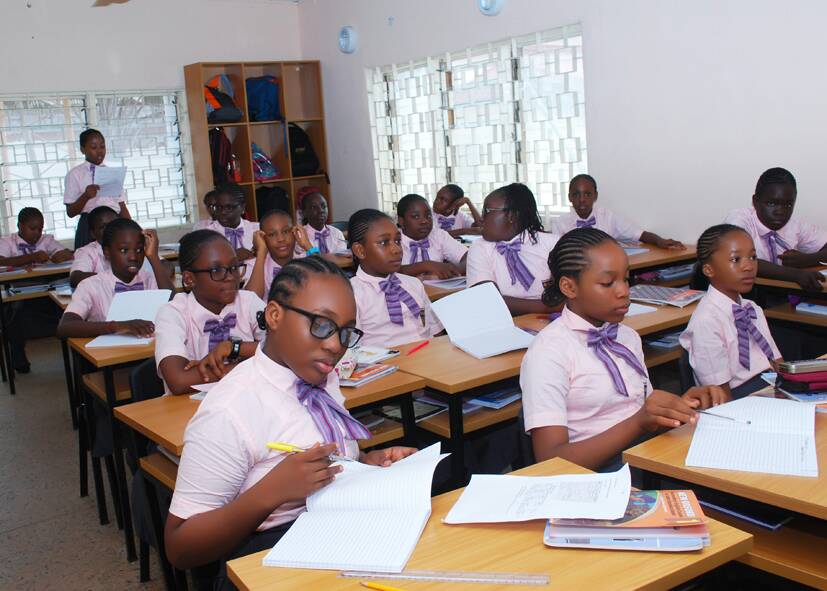
Free education must be supported by sufficient resources (Photo Credit: Internet)
This arrangement makes teachers in some cases spend up to 30 minutes writing questions on the board before learners can even begin answering. This means that by the time they finish copying the questions, some learners are already exhausted or distracted.
One of the most immediate effects of chalkboard examinations is the loss of valuable time during the testing process. Instead of using the allocated examination period entirely for answering questions, pupils must first copy the questions carefully into their answer sheets.
Writing test items on the chalkboard reduces the time available for learners to think critically and formulate answers. As an exam is supposed to measure understanding and reasoning, writing questions on the chalkboard and letting students copy can make students spend a large portion of the time copying questions, the focus shifts away from assessment.
The process also places additional pressure on teachers, who must ensure that questions are written clearly and correctly within limited chalkboard space.
Beyond the issue of time, chalkboard exams limit the types of questions teachers can set. Standard examination papers typically include structured sections such as multiple-choice questions, diagrams, tables, graphs, and reading passages. Presenting these elements clearly on a chalkboard is often difficult.
In subjects like mathematics and science, for example, diagrams and graphs are essential for testing students’ understanding of concepts. Reproducing these visuals accurately on a chalkboard can be challenging, especially in crowded classrooms.
Learners seated at the back may struggle to see small details, which could affect their ability to answer questions correctly. Also, some questions require clear diagrams, if the diagram is not accurate or visible to everyone, the assessment becomes unfair.
This situation is particularly worrying for Standard 8 learners preparing for mock examinations. Mock exams play a critical role in preparing pupils for the national examination. They replicate the structure and difficulty of the final tests, allowing teachers to identify gaps in learning while helping students become familiar with the examination format.
When these exams are simplified due to chalkboard limitations, students may enter the final examinations without proper preparation.
Another concern is that the potential compromises the integrity of examination. In some cases, teachers may write questions on the chalkboard before the official start of the examination in order to save time. This can create opportunities for learners to see the questions early. This creates a risk that some learners may have an advantage.
For learners, the chalkboard method can be both physically and mentally demanding. To some pupils, copying questions takes considerable effort, particularly when the handwriting on the board is small or unclear. In crowded classrooms, visibility becomes another challenge. This situation can increase anxiety among students who are already under pressure to perform well in examinations.
This policy may unintentionally widen disparities between public and private schools. Private schools, which often have access to independent funding, may continue printing professional examination papers. Meanwhile, public schools with limited resources may rely on chalkboards. This difference in testing conditions could influence learning outcomes. When assessment standards differ between schools, it affects the fairness of the education system.
Despite the challenges, the government’s directive was introduced with a clear objective: to protect families from financial pressures associated with school contributions. For many parents, the policy has provided much-needed relief. Some parents previously struggled to meet the various charges requested by schools throughout the academic year. This is where at times schools would ask for money several times in a term. For families with several children, this became very difficult.
By prohibiting schools from collecting money directly from learners, the government aims to ensure that education remains accessible to all children regardless of economic background. The current situation has sparked debate among education stakeholders about how schools can maintain quality learning without relying on student contributions.
Some experts suggest that the government should allocate dedicated funds specifically for printing examinations and purchasing essential teaching materials.
Others propose centralized printing systems managed by district education offices, where examination papers could be produced and distributed to schools.
This calls for greater consultation between policymakers and educators when implementing reforms that affect classroom practice. In this case, teachers being at the frontline of education were supposed to be consulted because their experience can help shape policies that are both fair and practical.
The debate surrounding the ban on school charges highlights a broader challenge facing Malawi’s education system: balancing the goal of free education with the need for adequate resources.
Public primary schools across the country already face shortages of textbooks, desks, and teaching materials. Without alternative funding mechanisms, the removal of school contributions may deepen these resource constraints. For now, teachers continue to adapt by using the tools available to them.
Free education is an important goal, but it must be supported by sufficient resources. Otherwise, the quality of education and the future of learners may be at risk.
As Malawi continues its efforts to strengthen access to education, the challenge will be ensuring that policies designed to support learners do not unintentionally undermine the very system meant to serve them.