
The growing alcohol crisis among the youth
By Faith Kaisi Mathotho
Concern is growing over the rising cases of alcoholism among young people in the country, with health experts, concerned stakeholders and community leaders warning that the trend is putting the future of nay youths at risk.
Some stakeholders have attributed the increase in alcohol abuse to peer pressure, easy access to alcohol beverages and lack of awareness on the dangers associated with excessive drinking.
Though the reasons why the youth tend to abuse alcohol are not documented despite the known negative health and social consequences on affected individuals and their communities, this is becoming a problem across Africa including Malawi at large.
Several studies were carried out to determine the main causes of alcohol abuse mainly among young people. One of them is a survey on alcohol use among the adult population in Malawi which was done by ALMA. It targeted an audience of persons aged 18+ in 2000 households.
In sub-Saharan Africa alone, the prevalence of any substance use among adolescents is 42% with alcohol and tobacco being the most common substances of choice. There is also evidenced use of other drugs like Khat (a flowering plant native to East and Southern Africa containing a stimulant believed to cause excitement, loss of appetite and euphoria) in East Africa only and tranquilizers in South Africa.
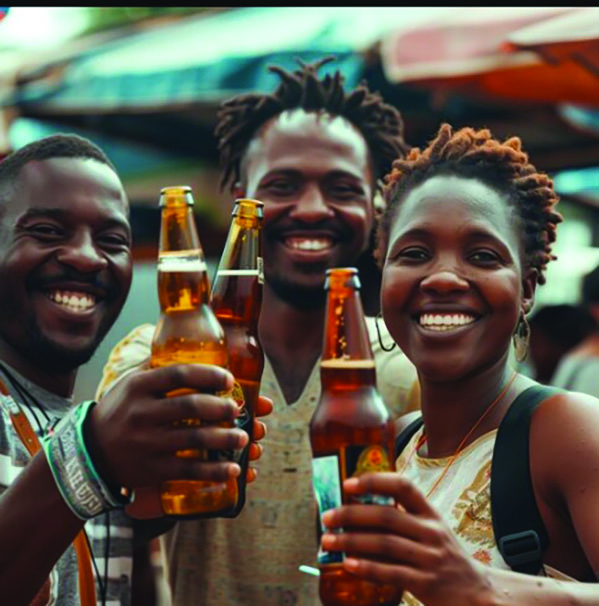
Threat to progress: Binge drinking (Photo Credit: Internet)
Looking at Malawi, we can relate to substances that are common, cheap and readily available. The government took an initiative to ban all cheap alcohol sachets in 2015 amid growing concern over alcohol abuse among the youth and reports of children drinking in class. But this ban was quickly countered by the manufacturing companies who turned to making 5-litre bottles, sold to groceries and road side shacks at wholesale prices.
These retailers then decant them into smaller quantities to sell to their consumers. Health consequences from consuming these strong cheap liquors are deadly, with increased risk of acute liver failure.
In relation to controlling alcohol content and selling places it is difficult to control production because it is produced and sold from homes. Even our law enforcers go and drink there including community police, and it is difficult to control opening. In addition, kachasu – a locally distilled high-alcohol liquor – is not included in any legal documents and by-laws.
When it comes to implementing of laws and regulations, shortage of resources to implement, regulation and enforce laws and knowledge of laws seems to be poor. Among persons aged 18+, 14.8% reported to have drunk alcohol in the 12 months preceding the survey.
Another survey done by Salimu and Nyondo-Mipando in 2020 discovered that moderation or reducing alcohol use amongst adolescents is a personal decision that also deters on self-esteem, with weaker personalities more bent on non-abstinence. Coupled with sensation seeking behavior, adolescents with poor self-esteem are less likely to abstain than those with stronger personalities.
The research also found out that many young people drink alcohol because of the influence they have from their parents drinking alcohol excessively, influence of role models, peer pressure and poverty.
“Bambo anga amamwa mowa tsiku ndi tsiku ngakhale tsiku logwira ntchito. Nthawi zina amandigulira ndiye ineyo ndilekelanji kumwa? (My father drinks beer everyday even on work days; what can stop me from drinking? Sometimes he offers it to me),” one of the respondents of the survey said.
Alcohol intake among young people is connected to lower academic achievement, school dropout, risky sexual behaviour, poor health outcomes and a high likelihood of alcohol dependency in adulthood.
Additionally, alcohol use among early adolescents and youth commonly co-occurs with other substance use and problem behaviors like tobacco and, other substance use, poor academic performance, school absenteeism, risky sexual behaviors and drink driving.
In general, there is a scarcity of data on alcohol consumption in Malawi, particularly among the underage. However, it is well documented that developing tendencies are in sync with global patterns such as increased binge drinking among the youth, diminishing gender differences and decreasing age of initiation.
This calls for joint efforts from government, parents, schools and communities to address the growing problem, stressing that without urgent action, alcohol abuse among young people could continue to threaten the health, productivity and future of the nation’s youth.